
A refreshing tropical smoothie made with mango, pineapple, cucumber, cauliflower rice, and flaxseed. It’s naturally sweet, creamy, and packed with fruits and vegetables—no leafy greens needed!
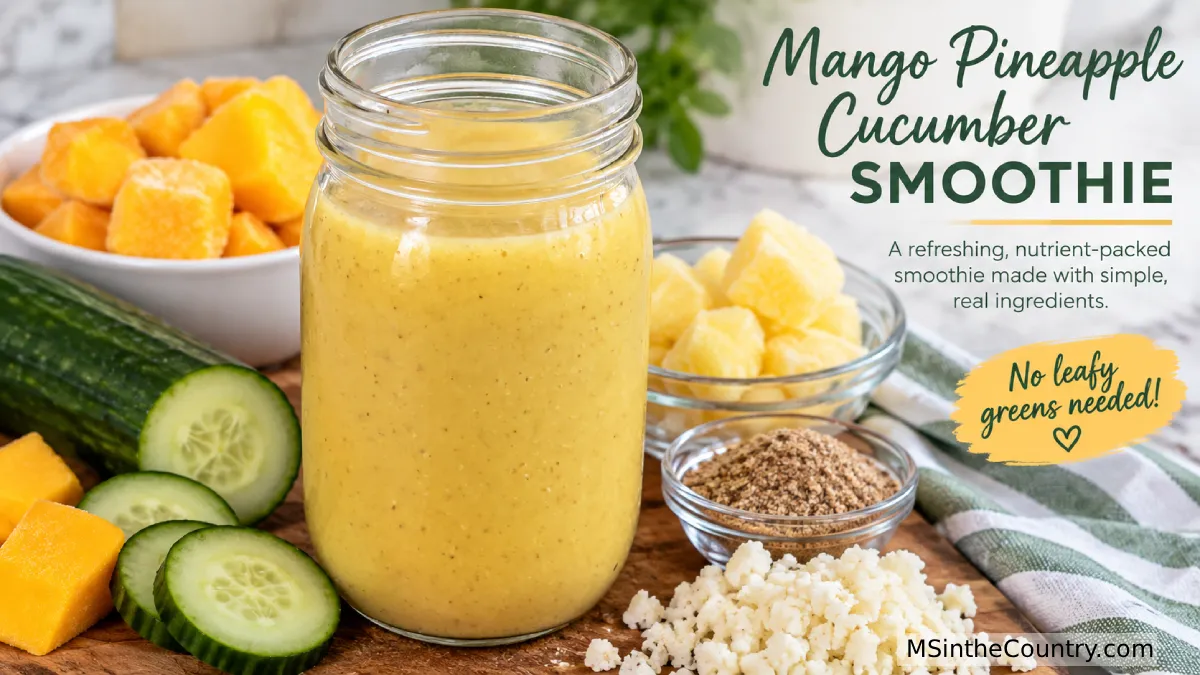
This mango pineapple cucumber smoothie was one of those recipes that happened completely by accident. I ran out of leafy greens, so I started digging through the freezer to see what else I could use.
I found frozen mango, cauliflower rice, and some frozen pineapple. I added an English cucumber and a couple of tablespoons of ground flaxseed, blended everything together — and it was delicious.
I went to take a better picture in a clear glass so you all could see the color, but before I could, I walked into the kitchen and smelled smoke through the open window. I dropped everything, went outside, and discovered there was a wildfire not far from our house. Thankfully, firefighters were already there. So my simple smoothie recipe turned into quite an afternoon. 😂
Once things settled down, I finally got back to my smoothie — and decided this accidental recipe was definitely going on the blog.
Jump to
Why This Mango Pineapple Cucumber Smoothie Works for MS
This smoothie is hydrating, easy on the stomach, and doesn’t ask much of you — which matters on the days when even a few steps around the kitchen feel like a lot.
English cucumber is over 95% water, so it’s an easy way to add volume and hydration to a smoothie without diluting the flavor the way plain water alone would. Pineapple contributes bromelain, a group of enzymes that have been studied for their role in calming inflammation in the body. Cauliflower rice sneaks in a serving of cruciferous vegetables without any noticeable flavor at all — you genuinely cannot taste it once it’s blended with the fruit.
🌿 Healing Tip:
Bromelain, the enzyme complex found in pineapple, has been studied for its anti-inflammatory properties. A PubMed review on bromelain’s therapeutic effects found that it shows anti-edematous and anti-inflammatory activity in various studies, and that it’s well absorbed by the body without losing its activity. That doesn’t mean a smoothie replaces medical treatment, but choosing anti-inflammatory foods regularly is one small, practical thing you have control over.
Why Every Ingredient Earns Its Place
English cucumber: The unexpected hero of this smoothie. It’s mild enough that it disappears into the mango and pineapple, but it adds a big dose of hydration and a light, refreshing quality that heavier smoothies don’t have. I use English cucumber because the skin is thin and not bitter, so there’s no peeling required — just wash it and toss it in.
Frozen mango: Gives the smoothie its tropical flavor and thick, creamy texture. Mango is a good source of vitamin C and beta-carotene, and using it frozen means you don’t need to add ice, which would water down the flavor.
Frozen pineapple: Adds brightness and natural sweetness alongside the mango, plus bromelain, the enzyme complex pineapple is known for. It pairs naturally with mango — the two almost always show up together for a reason.
Frozen cauliflower rice: This is the ingredient people are always surprised by. A cup blends in completely invisibly and adds extra volume, fiber, and cruciferous vegetables to the smoothie without changing the taste. If you’ve never added cauliflower to a smoothie, this is the recipe to try it with.
Ground flaxseed: Two tablespoons add plant-based omega-3s and a bit of fiber. I always use ground, not whole, flaxseed, since whole flaxseed tends to pass through the body undigested. I grind my flaxseed fresh in this small coffee grinder — it’s inexpensive, easy to clean, and makes just enough for a week’s worth of smoothies. I have a full post on the benefits of flaxseeds for MS if you’d like to read more.
Easy Ways to Make It Your Own
- Add a handful of spinach. The mango and pineapple hide the color and flavor completely, and it’s an easy way to work in extra greens if you have some on hand.
- Swap the water for coconut water. This adds natural electrolytes and a little more sweetness if you want it.
- Add fresh ginger. A small piece pairs beautifully with mango and pineapple and adds a bit of a bright kick.
- Adjust the pineapple to taste. If you prefer things less tart, start with a little less pineapple and add more mango instead.
Common Questions
Can I use fresh cucumber, mango, and pineapple instead of frozen? You can, but you’ll want to add a handful of ice so the smoothie stays thick and cold. The frozen fruit is really what gives this smoothie its texture.
Will I be able to taste the cauliflower? No. This surprises people every time, but blended with mango and pineapple, the cauliflower rice is completely undetectable. It just adds volume and creaminess.
Can I make this ahead of time? It’s best fresh, but you can portion the frozen ingredients into freezer bags ahead of time so everything is ready to dump straight into the blender.
Do I need to peel the cucumber? No — English cucumbers have a thin, mild skin, so there’s no need to peel it. Just give it a good wash first.
If you try this mango pineapple cucumber smoothie, I’d love to know what you think — and whether you can actually taste the cauliflower (spoiler: you won’t). Leave a comment below. I read every single one.
Recipe
Mango Pineapple Cucumber Smoothie
Equipment
- High-speed blender
Ingredients
- 1 English cucumber
- 2 cups frozen mango
- ¾ cup frozen pineapple chunks
- 1 cup frozen cauliflower rice
- 2 tablespoons ground flaxseed
- 1½ cups water
Instructions
- Roughly chop the English cucumber and add it to your blender.
- Add the frozen mango, frozen pineapple, frozen cauliflower rice, and ground flaxseed.
- Pour in the water.
- Blend on high until completely smooth and creamy.
- If too thick, add a little more water and blend again until it reaches your preferred consistency.
- Serve immediately.
Notes
- English cucumber doesn’t need to be peeled — just wash it well.
- Use ground flaxseed, not whole, so the omega-3s are actually absorbed.
- Frozen cauliflower rice adds volume and fiber without any detectable flavor.
- Store any leftover frozen cucumber, mango, or pineapple in labeled freezer bags for next time.
🌿 Wondering why your energy feels so depleted?
MS fatigue can have more than one thing working behind the scenes. My Energy Depleted Healing Guide helps you explore factors that may be draining your energy and gives you practical steps for supporting better energy. Learn more →
🍽️ Looking for more smoothie recipes?
If you enjoyed this Mango Pineapple Cucumber Smoothie, take a look at my smoothie recipes for more simple ways to blend fruits and vegetables into something delicious. They’re quick to make and especially handy on days when you want something nourishing without spending much time in the kitchen.
📌 Love this Mango Pineapple Cucumber Smoothie?
Save this pin for later! The Pinterest button is just below this image. 👇
Leave a Reply