

Exercise for MS doesn’t have to look like a formal workout. Yesterday I stood at my kitchen counter doing squats while our dog watched me like I’d finally lost it. Up, down. Up, down. Twenty of them, holding onto the edge of the sink because my balance isn’t what it used to be. It took maybe ninety seconds. It also left me a little out of breath, which tells you everything you need to know about where my fitness level actually sits.
This year, I turn another year older on the first day of fall—just as the seasons begin to change. That timing has always felt beautifully deliberate. Something about a birthday makes you take stock. Not necessarily in a sad way. Just… honestly.
And here’s my honest answer to the question, “How are you handling getting older with MS?” I don’t exercise for MS because I enjoy it. I really don’t. I do it because the alternative—losing more ground than MS has already taken—scares me more than a few seated marches ever could.
If you’re reading this from the couch right now, telling yourself you’ll move “in a few minutes,” I want you to know I get it completely. The couch always sounds better. Lying down always sounds better. When MS has already drained half your energy before noon, the idea of spending more of it on purpose feels almost unreasonable.
This isn’t the same “get moving” post you’ve read a hundred times. We already know movement matters. But when you have MS and your body seems determined not to cooperate, knowing that doesn’t make moving any easier. You don’t need another lecture or a long list of exercises you’re unlikely to do. Instead, I want to help you look at movement differently and find small, realistic ways to add it to your day—without it taking over your day or even feeling like exercise.
Getting Older Was Never Going to Be Simple — MS Just Adds a Layer
Everyone’s body changes with age. Muscles thin out. Bones lose density. Balance gets less reliable. Hearts have to work a little harder. That’s just biology, and it happens to people who’ve never heard of multiple sclerosis.
MS doesn’t cause a different aging process — it stacks its own challenges on top of the normal one. Weakness, mobility issues, balance problems, and a lot more sitting than any of us signed up for. Put those two things together, and you get a body that needs movement more than most, at exactly the moment when movement is hardest to want.
That’s the part I think gets lost in most MS wellness content. It’s not just “manage your MS symptoms.” It’s “protect your whole body — heart, bones, muscles, balance — while MS is actively working against your ability to do that.”
Why Exercise for MS Matters for Your Bones
Here’s something that doesn’t get talked about enough: MS and bone health are connected in ways that go beyond the obvious. Reduced mobility means less weight-bearing movement, and bones — like muscles — need to be used to stay strong. Less loading over time can mean lower bone density.
Research shows that people with MS have a higher risk of weakened bones and fractures. That isn’t meant to scare you. It is a reminder that even small, weight-bearing movements can matter.
Each time you rise from a chair or stand safely and march in place while holding your rollator, you place gentle weight through your bones and ask your muscles to work. It may not look like a traditional workout, but it supports your strength, balance, and bone health—all important for staying steady and independent as you grow older.
How Exercise for MS Supports Your Heart
MS doesn’t automatically cause high blood pressure or heart disease. But research has connected MS with a somewhat higher cardiovascular risk overall, and that’s worth knowing — not as a scare tactic, but as one more reason movement matters.
A 2024 review looked at physical activity in adults with MS. It found that movement improved cardiovascular fitness and several common measures of heart health. In other words, the same seated marches and resistance band exercises that improve your balance and strength are also quietly helping your heart. You don’t need a gym membership or a “cardio day.” You simply need movement—in whatever form your body can give it.
Exercise for MS Doesn’t Have to Look Like Exercise
If the word “exercise” makes you picture a treadmill and running shoes, let’s reset that picture entirely. My version of exercise looks nothing like a fitness magazine, and that’s exactly the point.
For me, it’s seated marches while I watch the news. It’s a resistance band looped above my knees during a phone call. It’s squats or push-ups at the kitchen counter, standing marches holding onto something sturdy, sit-to-stands on the days my knee agrees to cooperate, and slow, deliberate walking practice where I’m not trying to go far — I’m trying to go well.
None of this is impressive to look at. All of it counts.
Small Movements, Big Goal
Here’s the thing that keeps me motivated: my son is getting married, and I want to walk at that wedding. Not run. Not dance all night. Just walk — steadily, on my own two feet, for as long as the day asks of me.
That single goal is doing more for my consistency than any generic “stay healthy” reminder ever could. Every seated march is one small deposit toward that day. Every toe lift is me telling my legs, I need you to be stronger than you are right now. When the goal feels distant and small movements feel pointless, I think about that wedding, and suddenly thirty seconds of toe lifts feels like it’s worth something.
You don’t need a wedding to borrow this trick. You need your version of it — a grandchild’s graduation, a garden you want to keep tending, a porch you want to keep sitting on without help getting up from the chair. Find the thing. Let it carry you on the days motivation doesn’t show up on its own.
Some Days You’ll Do Less — That’s Not Failure
I’m not going to pretend every day looks the same. On days my knee feels unstable, I scale back. Sometimes way back. That used to feel like failure to me — like I was letting myself down. It isn’t. It’s listening to a body that’s already working overtime just to get through the day, and adjusting instead of abandoning ship entirely.
Consistency doesn’t mean doing the same amount every single day. It means showing up in some form, even when “some form” is three seated marches instead of twenty. The goal of exercise for MS isn’t a perfect streak. It’s not giving up on the idea of moving altogether.
The Birthday Reframe
As I turn another year older, I’m not trying to turn back the clock — that ship has sailed, and honestly, I’ve made peace with that. What I’m actually doing is trying to keep my body as capable as it can be for whatever years are ahead of it.
I don’t love the exercises themselves. I probably never will. But I’ve come to love what they represent: a small, stubborn refusal to let MS and age decide everything on their own. Every seated march is a vote for independence. Every toe lift is a vote for still being able to do the things I want to do, for as long as possible.
If sitting or lying down sounds better than moving right now — and with MS, it usually does — I understand completely. But I’d rather you close this post with one small movement than with none at all. Try a few seated marches. Try standing tall at your counter for thirty seconds. Try one sit-to-stand, using your arms if you need to.
Exercise for MS doesn’t need to be intense to make a difference. Small, consistent movements still count. It doesn’t have to be much. It just has to be something, today, and then again tomorrow. That’s genuinely the whole secret — no more complicated than that.
🧩 Want More Simple Ways to Support Your Health With MS?
If you’re trying to make healthy changes without feeling overwhelmed, download my free Find Your Root Cause of MS guide to explore patterns that may be affecting how you feel.
You’ll also be subscribed to my free weekly MS in the Country newsletter, where I share practical MS tips, simple whole-food recipes, and new articles to help you live better with MS. Sign up below 👇
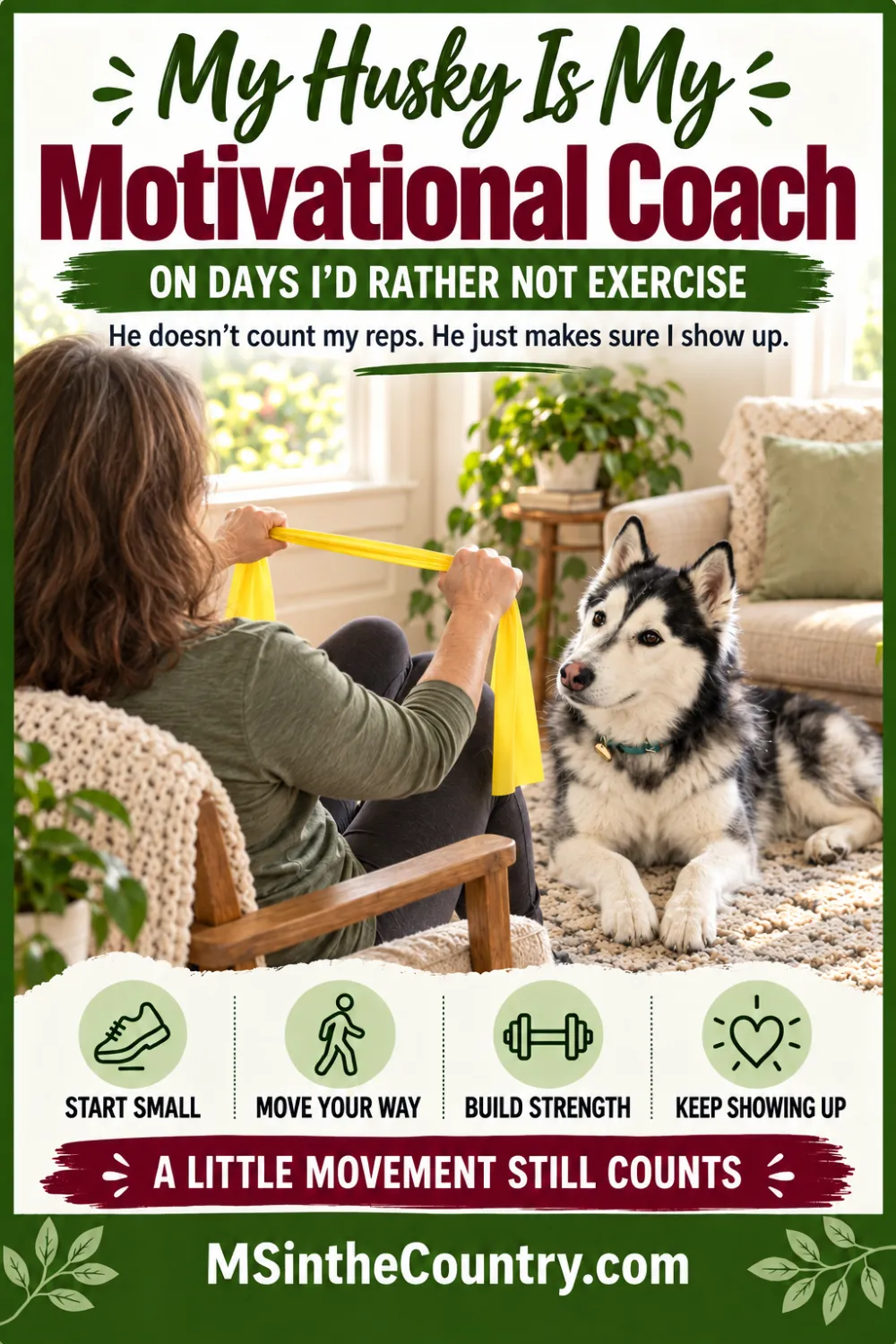
📌 Need Motivation for Exercise for MS?
Save this pin for later! The Pinterest button is just below this image. 👇
Leave a Reply