
A hearty, vegetable-packed skillet meal that works for breakfast, lunch, or dinner — and has been on my table for over 21 years.
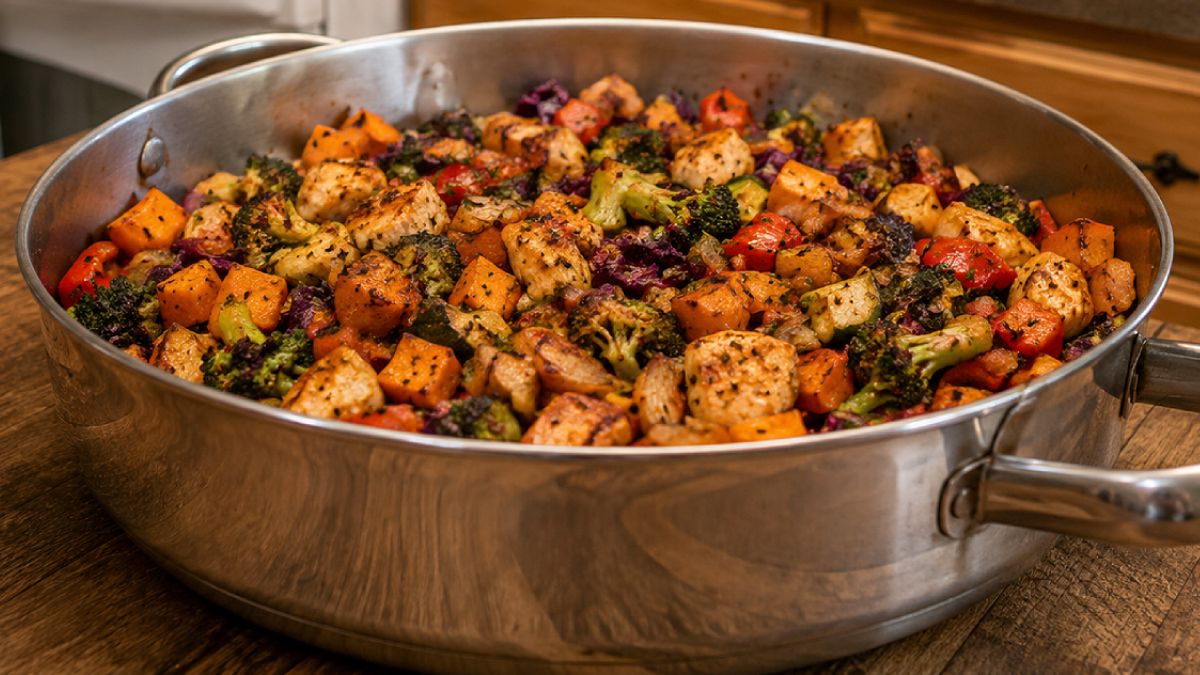
This MS-friendly sweet potato breakfast hash has been on my table for more than 21 years — and it looks a little different every single time I make it.
That’s what makes this MS-friendly sweet potato breakfast hash work so well after all these years — it adapts to whatever you have.
When I changed my diet to manage my MS, I had to learn to cook from scratch. I was figuring out what worked for my body, what supported my energy, and what I actually wanted to eat every day. This hash came out of that process — a simple skillet meal built around whatever vegetables I had on hand, anchored by sweet potatoes, and flexible enough to work for breakfast, lunch, or dinner.
Over two decades later, it’s still in regular rotation. In the fall, I make it with winter squash. In summer, I throw in zucchini and whatever is coming out of the garden. Some weeks it’s a clean-out-the-fridge situation, and those versions are often the best ones.
The other thing I love about this recipe — and I don’t say this lightly — is that everyone eats it. My family members who follow a standard American diet love it just as much as I do. When a vegetable-packed, anti-inflammatory skillet meal wins over people who aren’t thinking about their health at all, you know it’s genuinely good.
Jump to…
Why This MS-Friendly Sweet Potato Breakfast Hash Works
Managing MS naturally means finding meals that reduce inflammation, support gut health, and give you real energy — without requiring more than you have on a given day. This hash does all of that in one skillet with minimal cleanup.
It’s also one of the most fatigue-friendly recipes I make. The vegetables can be prepped ahead, so there’s no cutting in the morning. Frozen vegetables make it even faster — no prep at all, just open the bag and add them to the skillet. On a hard day, that kind of shortcut isn’t cutting corners. It’s smart cooking.
Why Every Ingredient Earns Its Place
Sweet potatoes: The anchor of this dish. Sweet potatoes are rich in beta-carotene, vitamin C, potassium, and fiber — nutrients that support immune function, reduce oxidative stress, and feed beneficial gut bacteria. They also have a lower glycemic index than white potatoes, which means slower energy release and less blood sugar fluctuation. I dice them small, so they cook through quickly and get slightly caramelized edges in the skillet.
🌿 Healing Tip:
Beta-carotene, the pigment that gives sweet potatoes their orange color, is a powerful antioxidant that the body converts to vitamin A. Vitamin A plays a critical role in regulating immune function — particularly the balance between pro-inflammatory and anti-inflammatory immune responses. For people with MS, where immune dysregulation is central to the disease process, eating beta-carotene-rich foods regularly is a simple and meaningful dietary strategy.
Onion and garlic: These two work together as the flavor foundation of the hash. Onion is rich in quercetin, a flavonoid with anti-inflammatory and antioxidant properties. Garlic contains allicin, which has been studied for its immune-modulating and antimicrobial effects. Together, they make the skillet smell incredible and taste like something far more complex than it actually is.
Bell pepper: Adds color, crunch, and a significant amount of vitamin C — more per serving than many citrus fruits. Vitamin C supports immune regulation and helps the body absorb iron from the leafy greens in this dish.
Cabbage: A cruciferous vegetable rich in sulforaphane, vitamin K, and vitamin C. Like the coleslaw mix in my healthy sloppy Joe recipe, cabbage adds bulk, nutrition, and anti-inflammatory compounds that blend quietly into the dish.
Broccoli: Another cruciferous powerhouse. Broccoli is one of the most nutrient-dense vegetables available — rich in sulforaphane, folate, and vitamin C. Chopped into small florets, it softens quickly in the skillet and distributes evenly through the hash.
🌿 Healing Tip:
Cruciferous vegetables like broccoli, cabbage, and Brussels sprouts contain sulforaphane, a compound that activates Nrf2 — the body’s master antioxidant switch. Research has shown that Nrf2 activation may have neuroprotective effects that are particularly relevant for people with MS, where oxidative stress contributes to nerve damage over time. Including cruciferous vegetables in multiple meals throughout the week is one of the most consistently supported dietary strategies for managing MS naturally.
Carrot: Adds natural sweetness, color, and beta-carotene. Diced small, it softens at the same rate as the sweet potato and blends into the hash beautifully.
Mushrooms: One of the few plant foods that naturally contain vitamin D, which is critically important for people with MS. Mushrooms also add a savory, meaty depth of flavor that makes the hash feel more substantial.
Leafy greens: Spinach, kale, or chard — whatever you have. Added at the end of cooking, they wilt down quickly and add folate, magnesium, iron, and vitamin K without changing the texture of the dish. I use whatever looks best at the store that week.
Coconut oil: My preferred cooking oil for this hash. Coconut oil has a medium-high smoke point that handles skillet cooking well, and it adds a very mild sweetness that complements the sweet potatoes. Use whatever oil you have — avocado oil works beautifully, too.
How to Add Protein
This hash is satisfying on its own, but adding protein makes it a more complete meal and keeps you fuller longer. Here are my two favorite options:
Leftover chicken: Chop or shred cooked chicken and stir it into the skillet in the last few minutes of cooking, just long enough to warm through. This is one of the best ways to use leftover roasted chicken.
Applegate Maple & Chicken Sausage: This is my go-to when I want something a little more special. I cook the sausage in the microwave following the directions on the box, then chop it into bite-sized pieces and add it to the skillet with the rest of the vegetables. It’s clean, flavorful, and the maple sweetness pairs perfectly with the sweet potatoes.
Hemp seeds: For a plant-based protein boost, sprinkle a tablespoon or two of hemp seeds over the finished hash just before serving. They blend in almost invisibly, add a mild nutty flavor, and contribute all essential amino acids along with healthy omega-3 fats. No cooking required — just sprinkle and serve.
Make It Ahead
This MS-friendly sweet potato breakfast hash is one of the best make-ahead breakfast recipes I know. Cook the full batch on Sunday, store it in the refrigerator, and reheat portions throughout the week. On a Monday morning when energy is low and time is short, having this ready to go is genuinely helpful.
It reheats well in a skillet over medium heat with a splash of water, or in the microwave. The flavors actually deepen overnight, so day-two hash is often better than day-one.
If you want to speed up the cooking process even further, use frozen vegetables. There’s no cutting involved — just open the bag and add them directly to the skillet. The texture is slightly softer than fresh, but the nutrition and flavor are both excellent.
My Favorite Combinations
One of the reasons this MS-friendly sweet potato breakfast hash has stayed in my rotation for over 21 years is how easily it adapts to the seasons. Once you have the base recipe, the variations are endless. Here are three I come back to regularly:
Fall Harvest: Sweet potatoes, butternut squash, red cabbage, onions, and kale. This is my cold-weather version — hearty, warming, and full of color.
Garden Veggie: Sweet potatoes, zucchini, broccoli, bell peppers, and spinach. A lighter summer version that uses whatever is coming in from the garden or looking good at the farmers market.
Clean Out the Fridge: Whatever vegetables need to be used up this week. Honestly, some of my best versions of this hash have come from this approach. Winter squash, cauliflower, Brussels sprouts, red cabbage — it all works.
This breakfast hash is even better topped with my easy homemade ketchup. It’s naturally sweetened and pairs perfectly with crispy sweet potatoes.
Common Questions
Can I use frozen vegetables? Absolutely — and I do this regularly. Frozen vegetables skip the cutting entirely, which is a meaningful time and energy saver. Add them directly to the skillet; they’ll release a little moisture as they cook, which actually helps steam everything through.
Can I make this ahead? Yes — this is one of the best recipes for meal prep. Make a full batch, refrigerate it, and reheat portions throughout the week. It keeps well for 4–5 days.
What leafy greens work best? Spinach wilts the fastest and has the mildest flavor. Kale takes a minute or two longer and has more structure. Chard is somewhere in between. All three work well — use whatever you have.
Does this work for people who don’t eat MS-friendly foods? Yes — and this is one of my favorite things about this MS-friendly sweet potato breakfast hash. Family members who follow a standard American diet love this recipe just as much as I do. It’s genuinely delicious, not just nutritious.
Can I eat this for lunch or dinner? Absolutely. I call it a breakfast hash because that’s traditionally what it is, but there’s nothing breakfast-specific about it. It’s a complete, satisfying meal any time of day.
Sweet Potato Breakfast Hash Ingredients
To make this simple, use items you already have. This is what this recipe calls for:
- 2 medium sweet potatoes
- 1 medium onion
- 3 cloves of garlic
- 1 tablespoon coconut oil (or oil of your choice)
- 1 bell pepper
- 1 cup cabbage
- 1 cup broccoli florets
- 1 carrot
- 1 cup mushrooms
- 2 cups leafy greens (spinach, kale, or chard)
- ½ teaspoon sea salt
- ¼ teaspoon black pepper
- ½ teaspoon paprika (optional)
Optional protein additions:
- Leftover cooked chicken
- Applegate Sausage, I like Applegate Maple & Chicken Sausage
This recipe has been on my table for over 21 years, and it still surprises me with how good it is. If you try it — whether you keep it simple or go all out with a Fall Harvest version — leave a comment below and let me know what combination you used. I read every single one.
Recipe
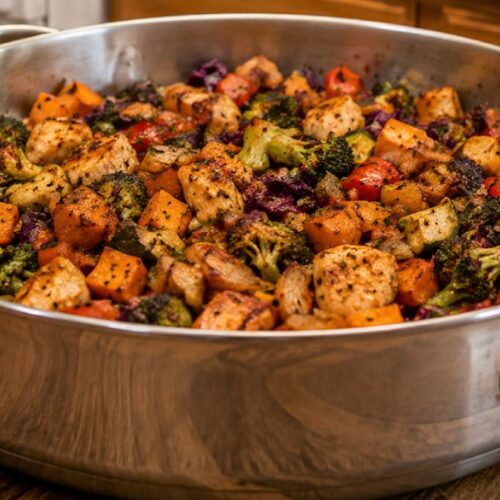
Sweet Potato Breakfast Hash
Equipment
- Large skillet
Ingredients
- 2 medium sweet potatoes, diced small
- 1 medium onion, chopped
- 3 cloves garlic, minced
- 1 tablespoon coconut oil (or oil of your choice)
- 1 bell pepper, chopped
- 1 cup cabbage, chopped
- 1 cup broccoli florets, chopped small
Instructions
- Heat coconut oil in a large skillet over medium heat.
- Add sweet potatoes and onions. Cook for 10–12 minutes, stirring occasionally, until the sweet potatoes begin to soften.
- Stir in garlic and cook for 30 seconds.
- Add bell pepper, cabbage, broccoli, carrot, and mushrooms. Cook for another 8–10 minutes, stirring occasionally. For extra flavor, let the vegetables sit without stirring occasionally so they brown slightly.
- Add leafy greens and stir until wilted, about 1–2 minutes.
- Season with sea salt, pepper, and paprika. Taste and adjust seasoning.
- If adding protein, stir in warm chicken or cooked sausage and heat through for 1–2 minutes.
- Serve hot, or cool and refrigerate for up to 5 days.
Notes
- Any vegetables work here. Winter squash, zucchini, cauliflower, Brussels sprouts, and red cabbage are all excellent additions or substitutions.
- Frozen vegetables can be used in place of fresh — add them directly from the bag with no thawing needed.
- For the Applegate sausage: microwave according to package directions, then chop into bite-sized pieces before adding to the skillet.
- Leftovers reheat well in a skillet with a splash of water or in the microwave.