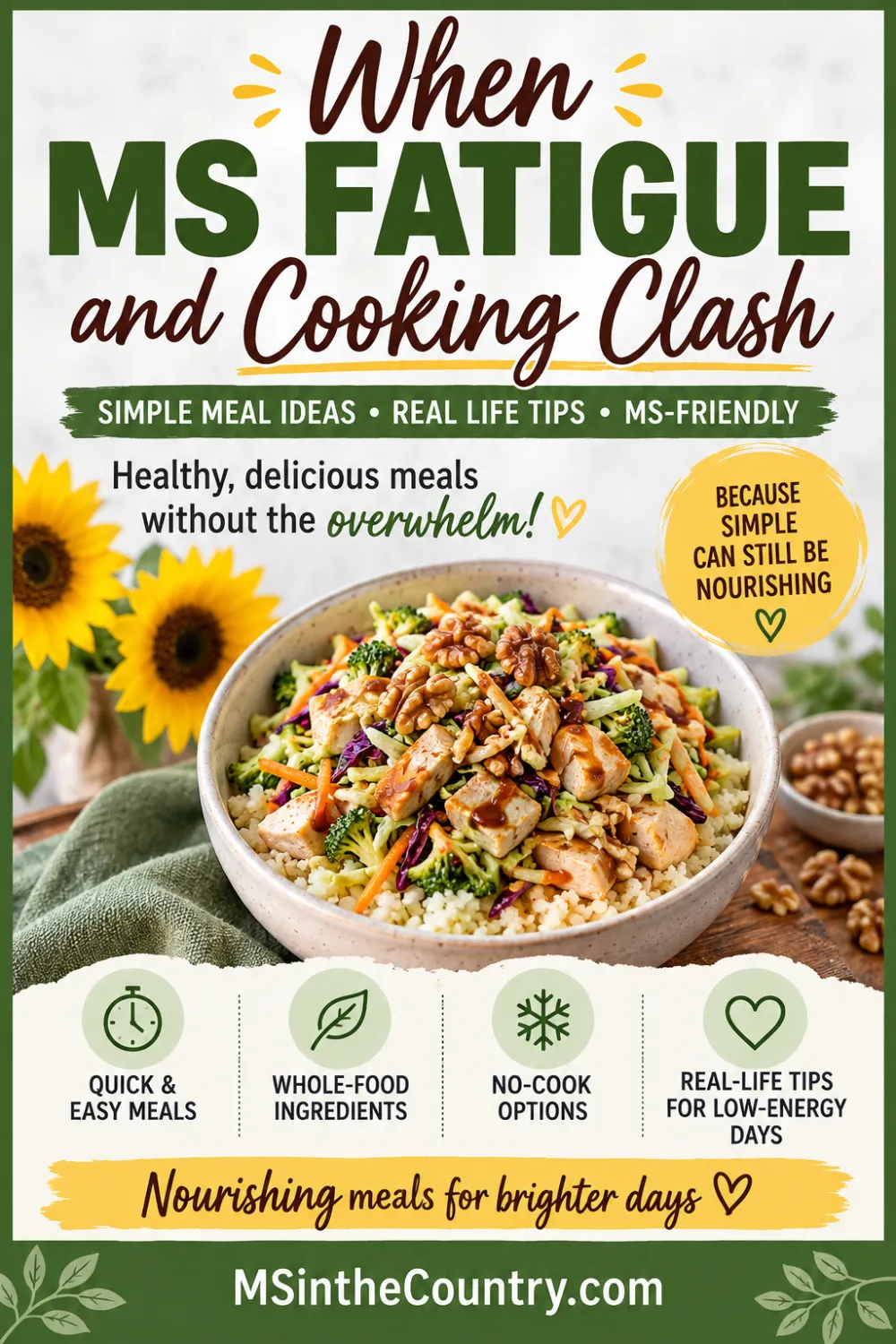
MS fatigue and cooking can be a difficult combination. When I first changed my diet, I was recovering from a horrible MS flare. I had double vision, very little energy, and no desire to prepare food. At the same time, I felt overwhelmed by all the advice telling me to eat this and avoid that.
I wanted to eat better, but even deciding what to make felt exhausting. I didn’t need complicated recipes or a long list of rules. I needed a simple place to begin.
Looking back, I think that is something we sometimes forget when talking about healthy eating. Knowing what we want to eat is one thing. Having the energy to shop for it, prepare it, cook it, and clean everything up afterward is something entirely different.
On a low-energy day, even a healthy recipe can feel like too much. That’s why I’ve learned to make things easier whenever I can.
When I first started eating this way, I could have used a list like this. I was trying to recover from an MS attack that had left me looking like I’d had a stroke. I was exhausted, dealing with double vision, and trying to figure out an entirely new way of eating at the same time.
I was determined to eat healthier, but determination didn’t magically give me the energy to prepare food.
There were days when I was hungry but couldn’t stand the thought of eating another salad. I didn’t have the energy to figure out what else to make, so sometimes I just didn’t eat.
Looking back, I wish someone had told me that healthy eating didn’t have to be so complicated.
I didn’t need another list of foods to avoid. I needed someone to show me how to make eating well easier.
I needed frozen vegetables, precut ingredients, simple bowls, leftovers in the freezer, and meals that didn’t require a recipe. I needed permission to take shortcuts. Most of all, I needed a handful of easy meals I could make even when I was tired and didn’t feel like cooking.
That’s one reason I’m sharing these ideas now. If you’re trying to make changes while your energy is low, I don’t want you to feel like every meal has to be perfect or complicated.
Start with what you can manage today.
You Don’t Need Perfect Conditions to Begin
Recently, I noticed two little sunflowers growing in dry, rocky ground. They weren’t planted in a carefully tended garden. No one had prepared rich soil or made sure they were watered every day. Yet there they were—bright, strong, and blooming anyway.
They reminded me of those difficult days when I was trying to change my diet while recovering from an MS flare. My circumstances were far from ideal. I didn’t have much energy, and I couldn’t see clearly. But I could still take one small step.
You don’t need perfect conditions to begin nourishing your body either. You don’t need to prepare every meal from scratch, follow every rule perfectly, or overhaul your entire diet overnight.
You can begin with one easy meal made from simple ingredients.
Maybe today that means heating a bag of frozen vegetables instead of chopping fresh ones. Maybe it means using precooked chicken instead of cooking chicken from scratch. Or maybe dinner is simply leftovers you pull from the freezer and heat.
Those small choices still count.
Like those little sunflowers, you can start where you are, use what you have, and grow from there.
When MS Fatigue and Cooking Clash
One of the hardest things about MS fatigue and cooking is that making the food is only part of the work. For those of us with MS, fatigue can turn even a simple task like making dinner into something that feels out of reach.
And cooking isn’t just cooking.
First, you have to decide what you’re going to eat. Then you need the ingredients. There may be washing, peeling, chopping, cooking, and finally cleaning up the kitchen. That can be a lot on a day when your energy is already running low.
But just like the sunflowers didn’t wait for perfect soil, we don’t have to wait for a “good energy day” to take care of ourselves.
Sometimes growing anyway just means finding an easier way through.
One place that shows up for me over and over is the kitchen—meals that don’t ask much of me, but still leave me nourished.
Instead of asking, “What should I cook tonight?” I find it easier to ask, “What is the easiest nourishing meal I can make with the energy I have?”
That one little change can take away some of the pressure.
If you’re looking for more ways to make low-energy days easier, my Energy Depleted guide is filled with simple, practical ideas to help you conserve your energy for the things that matter most.
Build a Simple Bowl
Managing MS fatigue and cooking often comes down to making meals as simple as possible. One of my favorite ways to make an easy meal is to build a bowl. There really isn’t a recipe. I just combine a vegetable, protein, healthy fat or something crunchy, and a little flavor.
Choose one or two things from each group:
- Vegetables: frozen cauliflower rice, broccoli slaw, frozen stir-fry vegetables, salad greens, or leftover roasted vegetables
- Protein: precooked chicken, leftover meat, canned wild salmon, or beans
- Healthy fat or crunch: avocado, olive oil, walnuts, pumpkin seeds, or sliced almonds
- Easy flavor: coconut aminos, garlic powder, herbs, or a simple sauce that works for you
You don’t have to use something from every category every time. Think of this as a starting point rather than another set of food rules.
If you need a little more inspiration, some of my favorite meals are the ones that start with ingredients that do most of the work for me. My Easy Mediterranean Cauliflower Rice Bowl uses cauliflower rice as a quick base, while my Sweet and Savory Pineapple Stir-Fry uses frozen pineapple and other simple ingredients to keep prep to a minimum. My Broccoli Slaw and Chicken Bowl is another example—it came together so quickly that it immediately earned a place on my low-energy meal list (recipe coming soon).
That was it.
It was quick, didn’t require much chopping, and even my husband said he wouldn’t mind having it again.
Those are the kinds of meals I want on my low-energy list.
Easy Meal Ideas for Low-Energy Days
You don’t necessarily need a recipe. Sometimes you just need an idea.
Here are a few simple combinations:
- Microwave cauliflower rice and top it with steamed vegetables, lemon/lime juice or coconut aminos, and hemp seeds.
- Heat frozen vegetables and add leftover chicken or beef.
- Toss salad greens with precut vegetables, avocado, seeds, and an easy protein.
- Warm beans with frozen vegetables and broth for a quick soup.
- Microwave a sweet potato and top it with chicken, avocado, or leftover vegetables.
- Blend a smoothie using frozen fruit, greens, seeds, and whatever additions work for you.
- Heat leftover soup or another meal you’ve frozen in an individual portion.
You can also keep a short list of meals like these somewhere in your kitchen. That way, when you’re tired, you don’t have to search for recipes or try to think of something.
Pick something from the list and make the easiest version of it.
Sometimes you may not want to cook at all. My Cooling Foods and Cooling Drinks have simpler ideas that require little or no cooking. I originally put these ideas together for hot days, but many of them can also be helpful anytime you want to keep food prep simple.
🌿 Healing Tip:
If fatigue makes preparing food difficult, look for ways to remove a few steps. Precut vegetables, frozen foods, precooked ingredients, and simple meals can make cooking feel more manageable. Research has also found that fatigue can be a barrier to food preparation for people with MS.
Give Yourself Permission to Use Shortcuts
When you’re dealing with MS fatigue and cooking feels like one more chore, shortcuts can make a big difference. I used to do much more food preparation from scratch. But I’ve realized that sometimes the energy I save in the kitchen is more valuable than doing everything myself.
Frozen vegetables are still vegetables. Bagged slaw still counts. Precooked chicken can still help you put together a nourishing meal.
There is no prize for using every ounce of energy chopping vegetables when a shortcut could help you eat and still have strength left for the rest of your day.
Some of my favorite energy-saving foods include:
- Steamable bags of frozen vegetables
- Microwaveable cauliflower rice
- Bagged broccoli slaw or coleslaw
- Precut onions, peppers, and mushrooms
- Frozen butternut squash or sweet potatoes
- Precooked chicken
- Canned tuna or wild salmon
- Organic canned beans
- Prepared guacamole
- Low-ingredient broth
- Raw nuts and seeds
- Leftovers frozen in single servings
When you’re shopping, look for foods that remove a step.
If chopping is difficult, buy something already chopped. If standing over the stove takes too much energy, look for something you can heat in the microwave. If cooking every night is too much, make extra when you do cook and freeze some for another day.
The goal isn’t to make the most impressive meal.
The goal is to feed yourself without using all the energy you have.
Do a Little Prep When You Have the Energy
Another thing that helps me is doing small amounts of prep when I have more energy. I’m not talking about spending hours in the kitchen preparing meals for the entire week. I simply prepare a few ingredients ahead of time so they’re ready when I need them.
These little shortcuts may not seem like much, but on a low-energy day, eliminating even one or two steps can make preparing a meal feel more manageable.
Here are a few things I like to do:
- Juice several citrus fruits at once. If I need lemon, lime, or orange juice for meals, I juice several at one time and store the juice in a jar with a lid in the refrigerator. Then I can simply pour out what I need for the next few days. I also use color-coded lids. For example, lime juice gets a green lid. Here’s a link to the lids I use.
- Cut bell peppers into strips. I keep them in a small glass storage container in the refrigerator. They’re ready to grab for cooking, adding to a salad, or eating as a snack.
- Chop cilantro and parsley ahead of time. When I want a little cilantro or parsley on a meal, I can grab some from the refrigerator instead of getting out the cutting board and scissors and doing more prep.
- Cut the whole onion at once. If a recipe only needs part of an onion, I don’t put the rest of the onion back in the refrigerator whole. I cut it into smaller pieces and store them in a glass container. The next time I need onion, part of the work is already done.
You can do the same thing with other ingredients you use often. The idea is simple: when you’re already doing a task, do a little extra to save yourself work later.
If you’re cutting one bell pepper, cut two. If you’re chopping an onion, prepare the whole thing if you’re juicing a lemon, juice a few more while everything is already out.
I think of it as helping my future self.
On a day when I have more energy, those extra few minutes aren’t a big deal. But on a day when my energy is low, opening the refrigerator and finding ingredients already washed, chopped, or prepared can make the difference between making something nourishing and deciding that cooking is just too much work.
You don’t have to devote an afternoon to meal prep. A few minutes here and there can make tomorrow’s meal much easier.
Do a Little Prep When You Have the Energy
When MS fatigue and cooking make mealtime feel overwhelming, having a few ingredients already prepared can remove some of the work.
Another thing that helps me is doing small amounts of prep when I have more energy. I’m not talking about spending hours in the kitchen preparing meals for the entire week. I simply prepare a few ingredients ahead of time so they’re ready when I need them.
These little shortcuts may not seem like much, but on a low-energy day, eliminating even one or two steps can make preparing a meal feel more manageable.
Here are a few things I like to do:
- Juice several citrus fruits at once. If I need lemon, lime, or orange juice for meals, I juice several at one time and store the juice in a jar with a lid in the refrigerator. Then I can simply pour out what I need for the next few days.
- Cut bell peppers into strips. I keep them in a small glass storage container in the refrigerator. They’re ready to grab for cooking, adding to a salad, or eating as a snack.
- Chop cilantro and parsley ahead of time. When I want a little cilantro or parsley on a meal, I can grab some from the refrigerator instead of getting out the cutting board and scissors and doing more prep.
- Cut the whole onion at once. If a recipe only needs part of an onion, I cut the rest into smaller pieces and store them in a glass container. The next time I need onion, part of the work is already done.
You can do the same thing with other ingredients you use often. The idea is simple: when you’re already doing a task, do a little extra to save yourself work later.
If you’re cutting one bell pepper, cut two. If you’re chopping an onion, prepare the whole thing. If you’re juicing a lemon, juice a few more while everything is already out.
I think of it as helping my future self.
Use Fewer Dishes
When dealing with MS fatigue and cooking, it can help to think about the energy you’ll need for cleanup too. I try to use as few dishes as possible when I cook. Every bowl, pan, cutting board, and utensil I use is something I’ll have to clean later.
If I can mix something directly in the bowl I’m going to eat from, I do. If one pan can cook several ingredients, I don’t use two. And if I’m already using a cutting board to prepare vegetables, I’ll try to do all my chopping at once.
It’s easy to think only about the energy needed to prepare a meal. But the meal isn’t really finished when the food is cooked. There’s still a kitchen to clean.
Using fewer dishes means less work afterward and less clutter waiting for me when I’m tired.
These aren’t huge changes. That’s actually the point.
Saving a few steps here, a few dishes there, and a little chopping later can add up. On a higher-energy day, I may barely notice the extra few minutes it takes to prepare something ahead. On a low-energy day, I’m very thankful I did it.
You don’t have to devote an afternoon to meal prep. Look for little ways to make things easier for yourself later.
Sometimes taking care of your future self is as simple as chopping the whole onion instead of half of it.
Make Your Better Days Work for Your Harder Days
Energy isn’t always predictable. Some days I can do more. Other days I need things to be as easy as possible.
When you have a little more energy, you can use some of it to make future meals easier.
You might cook extra chicken, make a larger pot of soup, roast extra vegetables, or divide leftovers into individual portions for the freezer.
Even small amounts of preparation can help.
You don’t need to spend an entire afternoon meal prepping. If you’re already cooking dinner, simply making an extra serving or two gives you something easy for another day.
Then, when a low-energy day comes along, you have a meal waiting for you.
Don’t Let Diet Overwhelm Stop You
One reason changing your diet can feel so difficult is that you may try to change everything at once.
You remove familiar foods, buy unfamiliar ingredients, and attempt recipes that require more time and energy than you have. Suddenly eating better becomes another source of stress.
It doesn’t have to be that way.
Instead, choose two or three easy meals you enjoy. Keep the ingredients available and repeat those meals as often as needed.
There is nothing wrong with eating the same simple breakfast several days in a row or making your favorite easy bowl twice in one week.
A simple meal you can actually prepare is more helpful than an ideal recipe that leaves you too overwhelmed to begin.
Once those meals become easy, you can add another one.
That’s how small changes begin to turn into habits.
Keep an Emergency Meal on Hand
I also think it helps to have what I call an emergency meal—not for a real emergency, but for those days when your energy disappears and whatever you planned for dinner simply isn’t going to happen.
Your emergency meal should require almost no thought.
It might be a serving of soup in the freezer, canned salmon over salad greens, beans and vegetables warmed in broth, or precooked chicken with a steamable bag of vegetables.
Keep the ingredients on hand and decide ahead of time what your emergency meal will be.
Then you don’t have to make another decision when you’re already tired.
Start Where You Are
Those two little sunflowers weren’t growing where I would expect flowers to thrive.
The ground was dry and rocky. Their surroundings weren’t perfect.
But they grew anyway.
The rocky ground didn’t stop those sunflowers. It just meant they grew a little differently than they might have in a garden bed.
That’s true for us too.
Some days call for more rest, simpler meals, and smaller steps—and that’s still progress.
If changing your diet feels overwhelming right now, don’t start by trying to change everything.
Start with dinner.
Or breakfast.
Or simply keep a bag of frozen vegetables in your freezer so there’s one less thing to prepare tomorrow.
One small change can make the next one easier.
Wherever you are today, rocky ground and all, I hope you find your own small way to nourish and bloom.
On a low-energy day, you don’t need to make an impressive meal. You only need something simple that helps nourish your body without draining the little energy you have.
Begin with one easy meal. Use shortcuts. Repeat it tomorrow if you want.
Like those little sunflowers growing in rocky soil, you can begin where you are and build from there.
🧩 Want More Simple Ways to Support Your Health With MS?
If you’re trying to make healthy changes without feeling overwhelmed, download my free Find Your Root Cause of MS guide to explore patterns that may be affecting how you feel.
You’ll also be subscribed to my free weekly MS in the Country newsletter, where I share practical MS tips, simple whole-food recipes, and new articles to help you live better with MS. Sign up below 👇
📌 Need Easy Meal Ideas for Low-Energy Days?
Save this pin for later! The Pinterest button is just below this image. 👇