
Two minutes of prep, zero cooking, and one of the most surprisingly satisfying treats you’ll eat all summer.
When I first heard about frozen grapes, my honest reaction was: big deal.
Grapes. In the freezer. I wasn’t impressed.
Then I tried one.
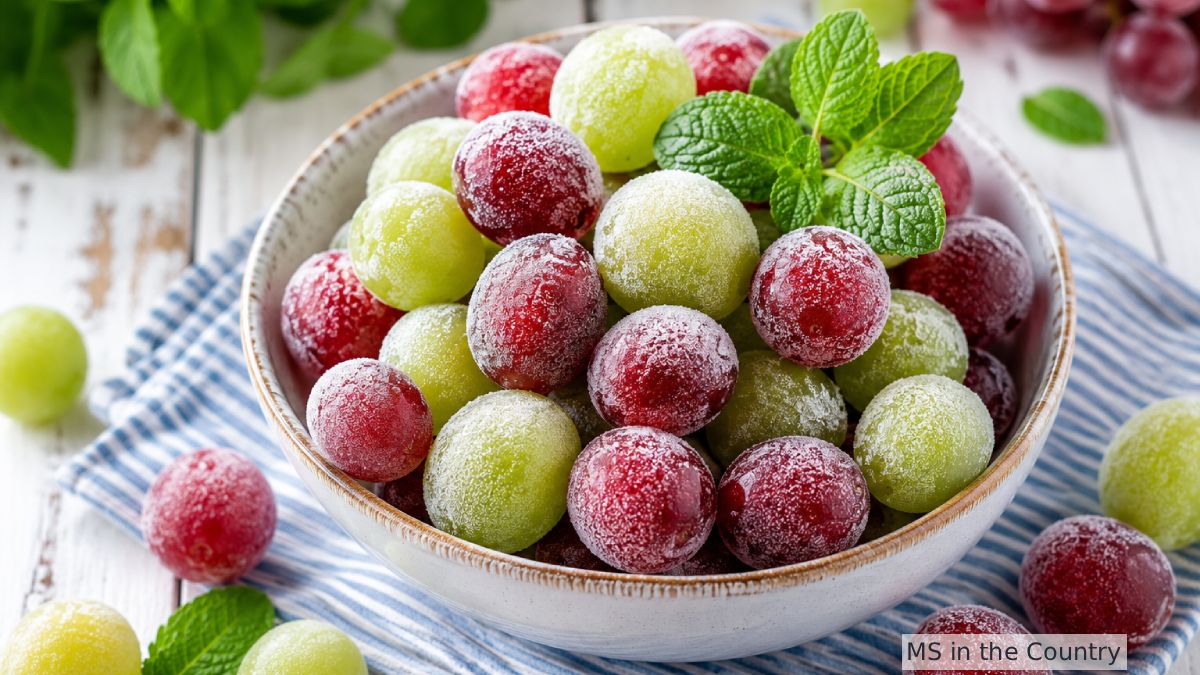
They taste like miniature, bite-sized popsicles — but instead of hard, icy chunks, the texture is smooth and slightly softer, almost creamy. Cold all the way through, naturally sweet, and incredibly refreshing on a hot summer day. I was genuinely surprised by how good they were.
Now they’re one of my favorite summer snacks. I keep a bag in the freezer all summer long, and I reach for them constantly — on hot afternoons, after meals, whenever I want something cold and sweet without any of the ingredients that come with conventional frozen treats.
They take about two minutes to prepare. That’s it.
Table of Contents
Why Frozen Grapes Work So Well for MS
For anyone managing MS naturally, frozen grapes check several boxes at once.
They’re anti-inflammatory. Grapes — especially red and purple varieties — are rich in resveratrol, quercetin, and other polyphenols that have been studied for their anti-inflammatory and neuroprotective properties. They’re also a natural source of vitamin C and vitamin K, and they contain no refined sugar, no additives, and nothing that needs a label read.
They’re cooling. Heat sensitivity is one of the most common and frustrating symptoms in MS. Many people with MS find that their symptoms temporarily worsen in heat — a phenomenon called Uhthoff’s phenomenon. Cold foods and drinks are one of the simplest ways to help the body stay cool from the inside. A bowl of frozen grapes is a genuinely pleasant way to do that.
And they require almost no energy to prepare. Two minutes of rinsing and spreading on a tray. That’s the entire effort.
Heat sensitivity is one of the most common and frustrating symptoms in MS — I spent 20 years losing my summers to it before I found strategies that actually helped. Cold foods and drinks are one of the simplest ways to help the body stay cool from the inside.
🌿 Healing Tip:
Resveratrol, the polyphenol found in grape skins — particularly red and purple grapes — has been studied for its antioxidant, anti-inflammatory, and neuroprotective properties. Research suggests it may help reduce oxidative stress and modulate immune response. As with many natural compounds, the research is still evolving, so whole grapes are best enjoyed as part of an overall anti-inflammatory diet rather than as a treatment. Eating whole grapes rather than drinking grape juice preserves the fiber and avoids the blood sugar spike that comes with juice — making frozen grapes a smarter everyday choice for people managing inflammation through diet.
Red vs. Green: Which Grapes Freeze Best
Both freeze beautifully, but they taste a little different once frozen — and knowing the difference helps you choose based on what you’re in the mood for.
Red grapes freeze into something that tastes almost like a grape-flavored popsicle. The skin holds up well, the sweetness intensifies slightly, and the resveratrol content is higher than in green grapes. These are my top pick when I want something that feels more like a real frozen treat.
Green grapes have a crisper, slightly tart flavor when frozen — more refreshing and a little lighter than red. They freeze just as well and are wonderful on a very hot day when you want something clean and bright rather than sweet.
Seedless grapes are essential. Seeded grapes become unpleasant once frozen — the seeds harden and get in the way. Always use seedless.
My personal preference is the grape flavor on its own — no additions needed. But I’ll share some easy flavor options below for anyone who wants to mix it up.
How to Freeze Them
The process is simple, but a couple of small steps make a big difference in the final result.
Wash and dry thoroughly. Rinse the grapes well and then dry them as completely as you can — pat them with a clean towel or let them air dry for a few minutes. Wet grapes freeze into a clump rather than individual pieces, which makes them harder to grab and less pleasant to eat.
Remove from the stems. Pull each grape off individually before freezing. Freezing them on the stem works but makes them harder to store and serve.
Spread in a single layer. Place the grapes on a parchment-lined baking sheet or a plate in a single layer, making sure they aren’t touching. This is the step most people skip — and it’s the one that matters most. Grapes that touch each other freeze together into a solid mass. Spread out individually, they freeze as separate pieces you can grab one at a time.
Freeze first, then transfer. Once frozen solid, transfer to a zip-top bag or airtight container for storage. This two-step process is what gives you individual frozen grapes rather than a frozen block.
How Long to Freeze Them
Freeze for a minimum of 2 hours — but 4 hours or overnight gives the best result. The longer they freeze, the more completely they set all the way through, which is what gives them that smooth, popsicle-like texture rather than a partially icy exterior with an unfrozen center.
I usually prep a batch the night before I want them and pull them out the next afternoon. Overnight freezing is the easiest approach — no timing required.
Storage Tips
Once transferred to a bag or container, frozen grapes keep well in the freezer for up to 2 months. After that, they can develop freezer burn and the texture starts to suffer.
A zip-top freezer bag works perfectly. Press out as much air as possible before sealing. A glass container with a tight lid also works well if you prefer to avoid plastic.
Pull them straight from the freezer and eat immediately — they soften quickly at room temperature, so there’s no thawing needed or wanted. Grab a small bowl, pour some in, and eat them cold.
Ways to Flavor Frozen Grapes
I eat mine plain. The grape flavor on its own is exactly what I want — sweet, clean, and naturally refreshing. But if you’d like to add a little something, here are a few simple options that work well without overpowering the grape:
Lime zest: Grate a little lime zest over the grapes before freezing. The citrus brightens the flavor and adds a tropical note that pairs beautifully with both red and green grapes.
Cinnamon: A very light dusting of cinnamon over green grapes before freezing gives them a warm spice note that’s surprisingly good — almost like a frozen cinnamon apple.
Chili powder and lime zest — Just a pinch of chili powder and a little fresh lime zest tossed over the grapes.
A light coating of any of these additions works best if you toss the grapes with just enough water to make them slightly damp first — that gives the seasoning something to stick to before freezing.
Common Questions
Do frozen grapes taste like sorbet? They’re somewhere between a popsicle and sorbet — the texture is smooth rather than icy, and the flavor is pure grape rather than anything added. If you like both, you’ll love frozen grapes.
Can I refreeze them if they thaw? It’s best not to. Refreezing affects the texture and can make them slightly mushy. Make smaller batches if you find you’re thawing more than you eat at once.
Are they safe for kids? Yes — kids love them. The small, round shape means they should be supervised for very young children the same way you’d supervise any small round food, but older kids typically go through a bowl of these faster than adults.
Do I need to peel them? No — the skin is part of what makes them work. It holds the shape during freezing and contains the resveratrol and other beneficial compounds.
Can I use grapes with seeds? Technically yes, but it’s not enjoyable. The seeds harden significantly when frozen and make them unpleasant to eat. Seedless grapes only.
Are these good during a flare or on a high-fatigue day? They’re one of the best snacks for exactly those days. Two minutes of prep when you’re feeling well means you have something cold, nourishing, and effortless available whenever you need it. That kind of advance prep is one of the most practical fatigue management strategies there is.
Once you try frozen grapes, you’ll wonder why you waited. If you make them this summer — plain or with one of the flavor variations — leave a comment below and let me know what you thought. I read every single one.
Recipe
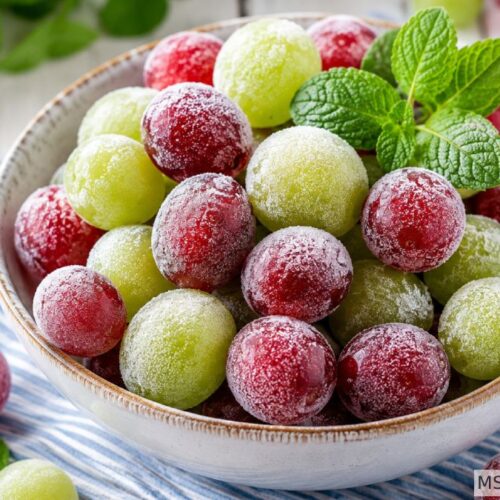
Frozen Grapes
Equipment
- Baking Sheet
- Parchment paper
- Freezer bag or airtight container
Ingredients
- 2 cups seedless grapes (red, green, or a mix)
Instructions
- Rinse the grapes thoroughly and dry them as completely as possible — pat dry with a clean towel or let air dry for a few minutes.
- Remove each grape from the stem individually.
- Line a baking sheet or plate with parchment paper. Spread the grapes in a single layer, making sure none are touching.
- Place in the freezer for at least 4 hours, or overnight for best results.
- Once frozen solid, transfer to a zip-top freezer bag or airtight container. Press out excess air and seal.
- Serve straight from the freezer. No thawing needed.
Notes
- Seedless grapes are essential — seeded grapes become unpleasant once frozen.
- Dry the grapes thoroughly before freezing to prevent them from clumping together.
- The single-layer freeze step is what gives you individual grapes rather than a frozen block — don’t skip it.
- Store in the freezer for up to 2 months.
- Optional: Toss grapes in a little water and dust with lime zest, cinnamon, or chili powder and lime zest before freezing.