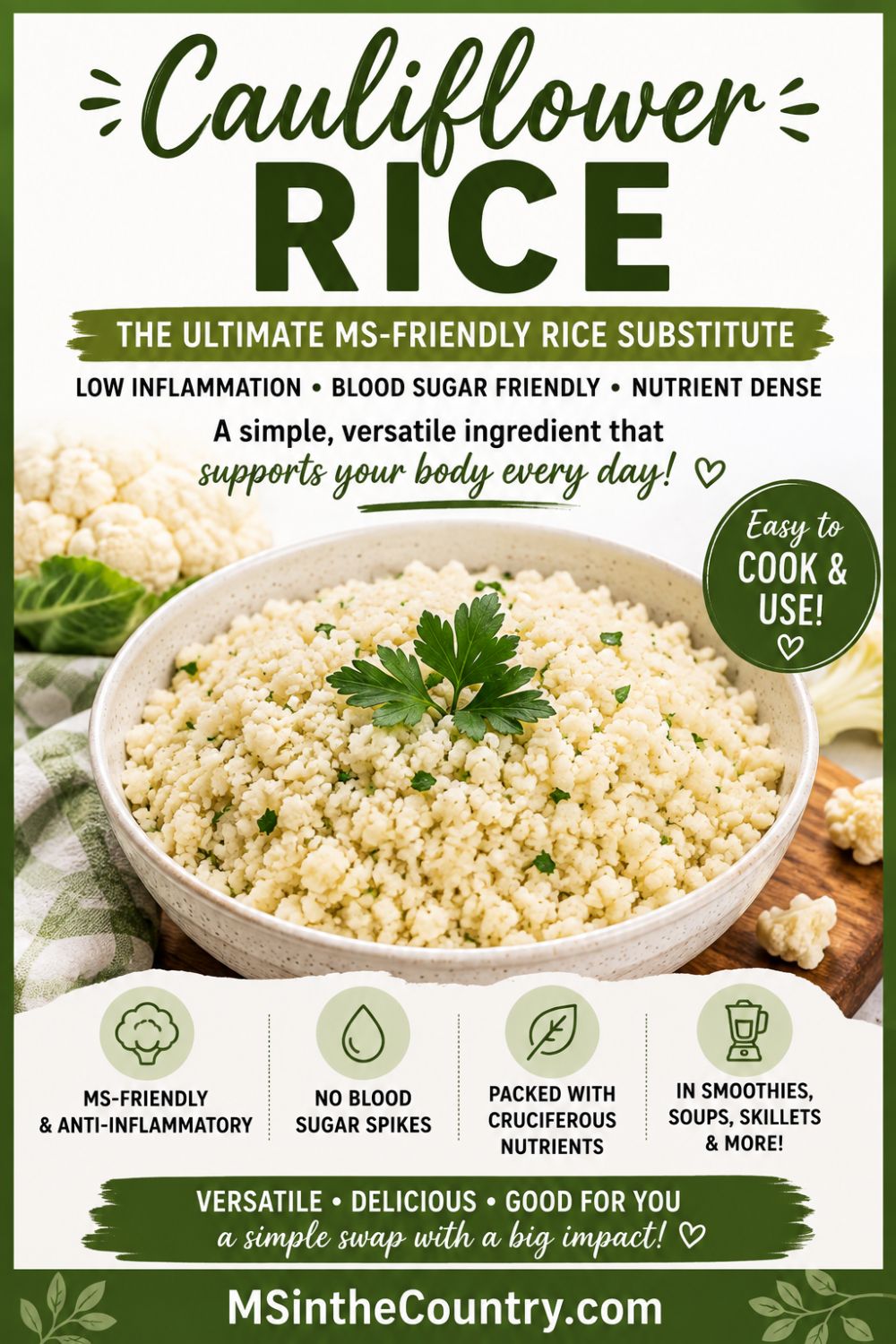
Why frozen cauliflower rice is one of the most useful things in my freezer — and how I use it in everything from skillets to smoothies.
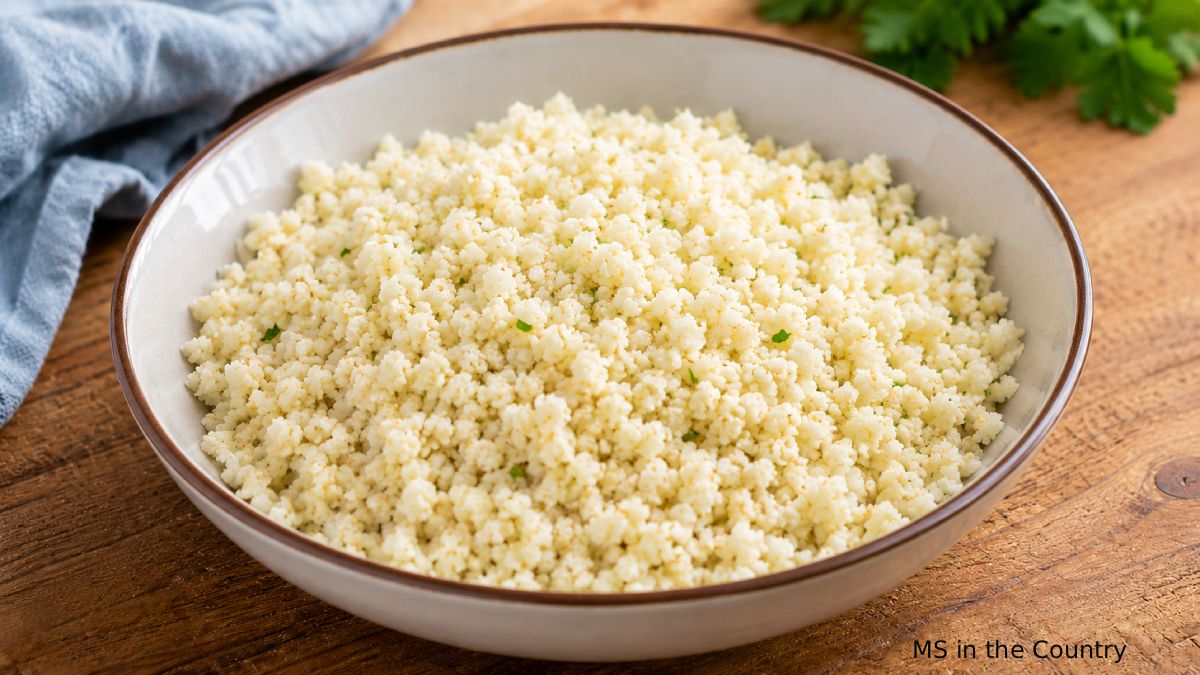
Cauliflower rice is my favorite MS-friendly rice substitute — and ironically, I didn’t even grow up liking rice.
My family ate white rice as a side dish — just rice and soy sauce, nothing else — and I never developed a taste for it. I didn’t even eat rice as an adult. So when I changed my diet to help manage my MS and started discovering cauliflower rice, I wasn’t giving up something I loved. It was never really my thing to begin with.
What I was doing was learning to cook from scratch for the first time. This was early enough that the internet was new and recipe blogs barely existed. I was figuring things out on my own, adding more cruciferous vegetables to my diet, and slowly getting more creative with what I made. That’s when cauliflower rice entered the picture.
The problem was how I made it back then.
I’d buy a whole head of cauliflower, chop it up, and pulse it in the food processor. The result was fine — mild, versatile, easy to use in dishes. But the process was messy and time-consuming in a way that made me dread making it. I used cauliflower rice rarely, not regularly, because the prep work just wasn’t worth it on most days.
When stores started selling frozen cauliflower rice, everything changed.
Now I keep multiple bags in my freezer at all times. I add it to skillets, stir it into soups, pile it under saucy dishes, and — this one surprises people — blend it into smoothies. The taste is so mild that it disappears completely into whatever you’re making. My husband even stirs it into his chili.
Jump to…
Why Cauliflower Rice Is an Ideal MS-Friendly Rice Substitute
For anyone managing MS naturally, white rice is a food worth reconsidering. It’s a refined carbohydrate with a high glycemic index, meaning it raises blood sugar quickly — and blood sugar spikes trigger an inflammatory response in the body. For people with MS, where managing chronic low-grade inflammation is a central goal, that matters.
Cauliflower rice gives you something to eat in its place that actively works for your body rather than against it.
Cauliflower belongs to the cruciferous vegetable family, alongside broccoli, Brussels sprouts, and cabbage. This family of vegetables contains sulforaphane — a compound studied extensively for its anti-inflammatory and neuroprotective properties. Eating more cruciferous vegetables is one of the most consistently supported dietary recommendations for people managing MS naturally, and cauliflower rice makes that easier than almost anything else.
🌿 Healing Tip:
Sulforaphane, found in cruciferous vegetables like cauliflower, has been shown in research to activate Nrf2 — a protein that triggers the body’s own antioxidant defense system. For people with MS, where oxidative stress contributes to nerve damage and inflammation, regularly including cruciferous vegetables in meals is one of the most practical dietary strategies available.
It’s also worth noting what cauliflower rice doesn’t do. It doesn’t spike blood sugar. It doesn’t contribute to gut inflammation. It doesn’t crowd out the vegetables your body actually needs. Instead, it adds fiber, vitamin C, choline, and B vitamins in every serving — quietly, without changing the flavor of your meal.
What Frozen Cauliflower Rice Actually Is
Frozen cauliflower rice is exactly what it sounds like: cauliflower that has been processed into small, rice-sized pieces and frozen. Most major grocery stores carry it, and warehouse stores like Costco typically sell it in large bags that are very economical.
The frozen version is just as nutritious as fresh — freezing preserves the nutrients well — and it’s dramatically easier to use. No chopping, no food processor, no mess. You open the bag and cook it directly from frozen.
Most bags are steamable, which means you can microwave them right in the bag and have cauliflower rice ready in about five minutes. That’s the method I use most often. You can also cook it in a skillet with a little oil if you prefer a slightly drier, more textured result.
🌿 Healing Tip:
Frozen vegetables are picked and processed at peak ripeness, which means their nutrient content is often comparable to — and sometimes higher than — fresh vegetables that have been sitting in transit or on store shelves. Choosing frozen is not a nutritional compromise. For people managing MS on a budget or with limited energy for grocery shopping, a well-stocked freezer is a genuinely smart strategy.
How I Use Cauliflower Rice
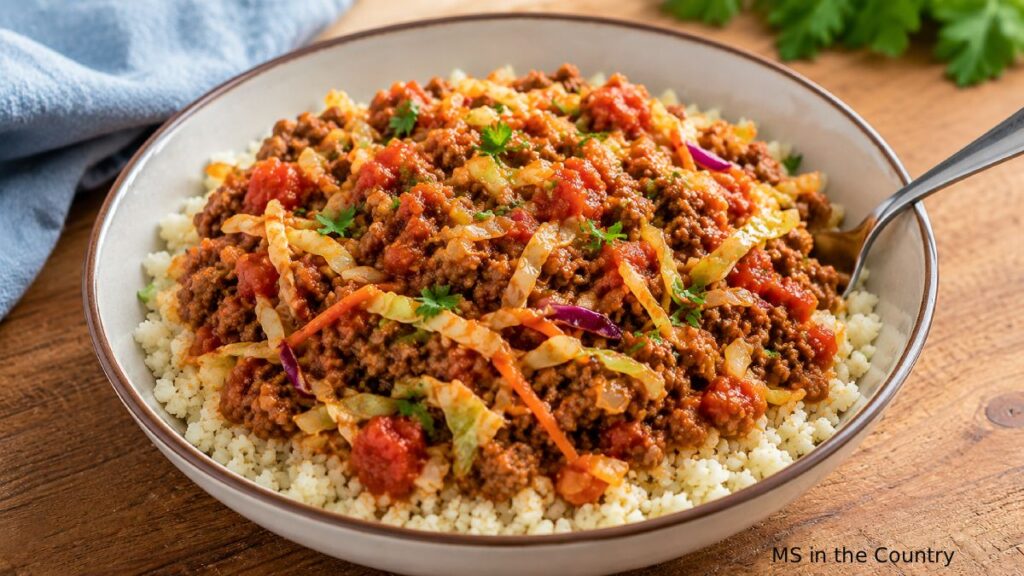
The thing that makes frozen cauliflower rice such a staple in my kitchen is how many ways it works. The mild flavor means it adapts to almost anything.
As a base for saucy dishes. This is the most obvious use — anywhere you’d serve rice, you can serve cauliflower rice instead. My healthy sloppy Joe filling is one of my favorite things to pile on top of it. The cauliflower soaks up the sauce, and the whole thing comes together beautifully.
Stirred into soups and stews. Add a handful directly to a pot of soup near the end of cooking. It softens quickly and adds body and nutrition without changing the flavor. My husband adds it to his chili this way.
Mixed into skillets and stir-fries. Stir it into any one-pan meal in the last few minutes of cooking. It blends into the dish so naturally that people often don’t even notice it’s there.
Blended into smoothies. This is the one that surprises people most, and it took me longer than it should have to think of it. Frozen cauliflower rice blends completely smooth and adds creaminess without any detectable cauliflower flavor. It’s one of the easiest ways to get cruciferous vegetables into your diet every single day. I add it to my mango smoothie regularly.
🌿 Healing Tip:
One of the most effective strategies for managing MS through diet is increasing the overall variety of vegetables you eat — not just eating more of the ones you already like. Adding frozen cauliflower rice to smoothies, soups, and skillets is a simple way to increase your daily vegetable intake without requiring extra meals, extra prep time, or foods you have to talk yourself into eating.
Common Questions
Does frozen cauliflower rice taste like cauliflower? Very mildly, and only on its own. Once it’s mixed into a dish or blended into a smoothie, the flavor disappears almost completely. If you’ve avoided it because you don’t love cauliflower, it’s worth trying in a recipe context before writing it off.
Can I use it straight from frozen? Yes — that’s how I use it most of the time. Steamable bags go straight into the microwave. For skillets, you can add it directly from the bag; just give it a couple of extra minutes to cook through.
How much should I use? There’s no wrong answer. I often add a whole bag to a skillet recipe or a large pot of soup. In smoothies, I use about a quarter cup per serving. Start with less if you’re new to it and adjust from there.
Where do I buy it? Most grocery stores carry it now, usually in the frozen vegetable section. Costco sells it in large bags at a good price, which is what I typically buy.
Is it good during a flare? Yes — especially the steamable bag version, which requires almost no effort. During a flare, getting anti-inflammatory vegetables into your body with minimal energy expenditure is exactly the kind of practical strategy that supports recovery.
If you’ve been avoiding cauliflower rice because it seemed like too much work, I hope this changes your mind. The frozen version genuinely is a game-changer — and once you start adding it to everything, it’s hard to imagine cooking without it.
Have a favorite way to use cauliflower rice that I didn’t mention? Leave a comment below — I’d love to hear it.
🧩 Not sure why your MS symptoms aren’t improving?
Discover which of the four MS healing patterns best matches your symptoms with my free Find Your Root Cause of MS guide. When you subscribe, you’ll also receive my weekly newsletter filled with practical, research-backed tips. Get your FREE guide here →
You May Also Enjoy…
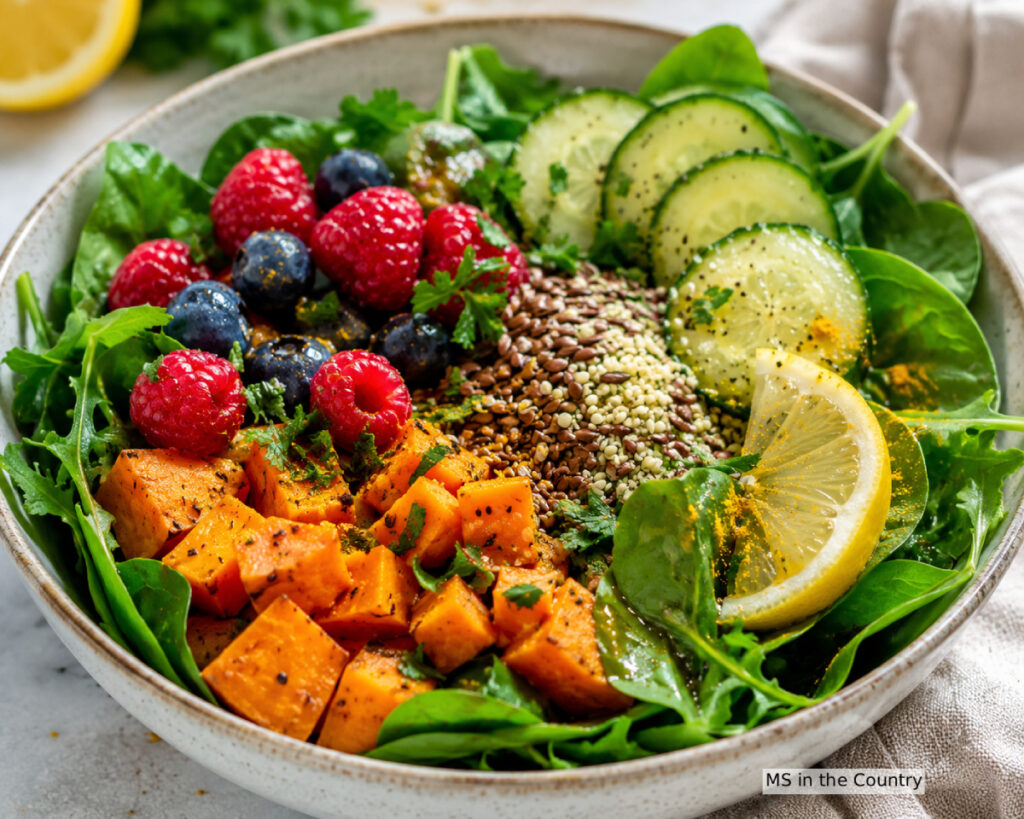
5-Minute MS Gut Healthy Bowl
This 5-minute gut-healthy bowl is an MS-friendly no-cook meal packed with leafy greens, resistant starch, omega-3s, and probiotics — ready in minutes with almost no effort.
🥣 5-Minute MS Gut Healthy Bowl
🧩 Still Trying to Figure Out Your MS Symptoms?
Download my free Find Your Root Cause of MS guide to discover which healing pattern best matches your symptoms. You’ll also be subscribed to my free weekly MS in the Country newsletter, where I share whole-food recipes, practical MS tips, and new articles to help you live better with MS. Sign up below 👇
📌 Love this Cauliflower Rice recipe?
Save this pin for later! The Pinterest button is just below this image. 👇