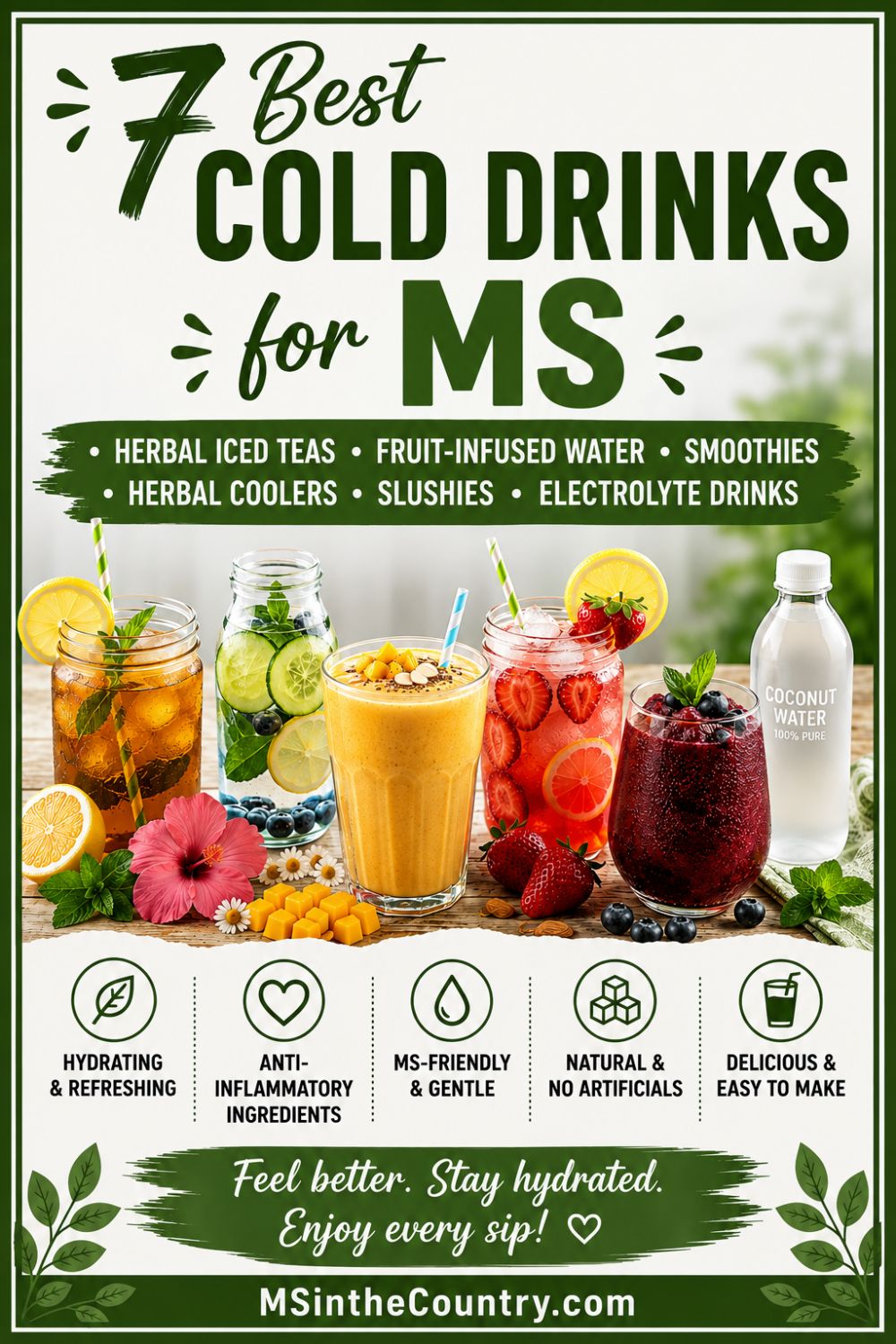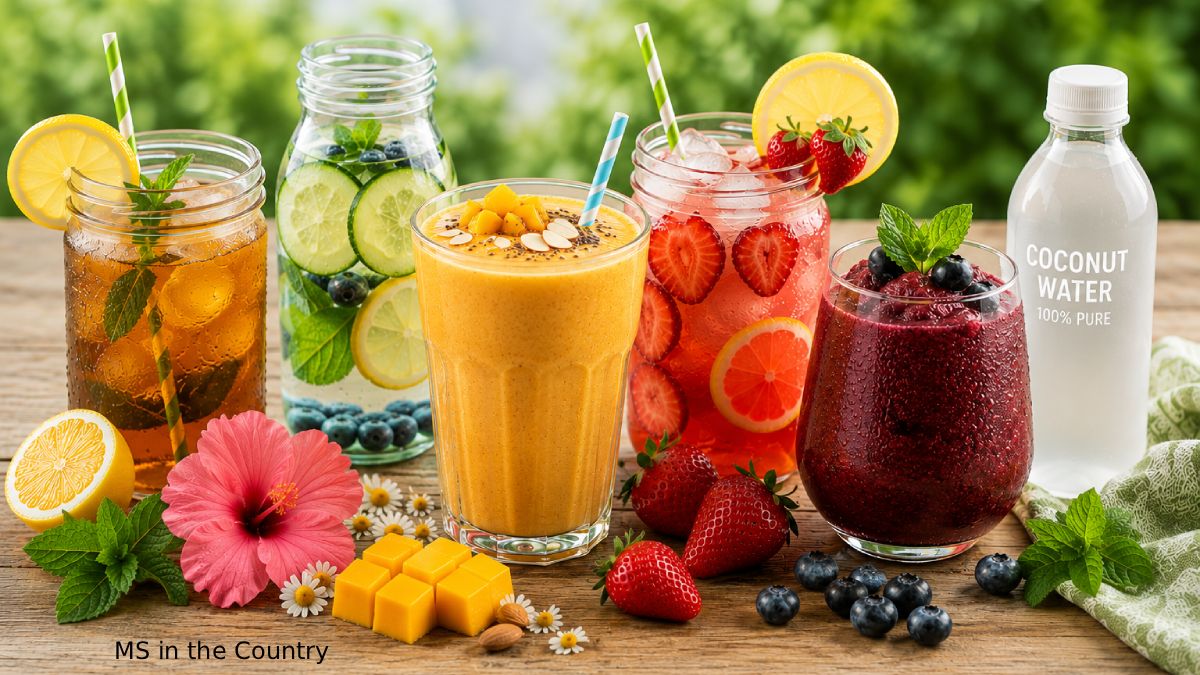
Cold drinks for MS weren’t always part of my daily routine. When I was younger, I almost never drank plain water. I lived in the city back then, and I hated the taste of the tap water — though I didn’t understand why until years later. It wasn’t until my husband and I moved out here to the country and had to drill our own well that I found out what I’d been missing. That first glass of well water, no chemicals, no aftertaste — I couldn’t believe water could actually taste good.
Then I started managing my MS naturally, and that meant cutting out sugary drinks for good. Water became my go-to. But drinking plain water, day in and day out, gets old fast. So I started experimenting — and over the years, I’ve built a whole rotation of cold drinks that keep me hydrated, keep me cool, and actually taste like something I look forward to.
If you’ve read my Cooling Foods for MS post, you know how much heat affects my symptoms. Hydration is the other half of that equation. So today I’m sharing everything in my cold-drink rotation — herbal iced teas, fruit-infused water, smoothies, no-sugar electrolyte drinks, frozen fruit slushies, and a brand-new invention I’ve been experimenting with this summer.
Jump to…
Why Cold Drinks for MS Works
If you have MS, you’ve probably noticed that heat doesn’t just make you uncomfortable—it can temporarily worsen symptoms like blurry vision, heavy limbs, brain fog, and fatigue.
This temporary worsening is called Uhthoff’s phenomenon. It happens because heat slows nerve signals in areas where myelin has been damaged. Research estimates that 60–80% of people with MS experience this temporary worsening of symptoms with heat exposure.
MS can also affect your body’s natural ability to regulate temperature and sweat. As a result, many of us don’t cool down as efficiently as we once did. That’s why staying cool and well hydrated is so important.
You can read about my experience with heat intolerance here.
That’s where cold drinks come in. Staying well-hydrated helps regulate core body temperature, and choosing genuinely cooling drinks (versus sugar-loaded ones that spike energy and then crash it) supports steadier energy, clearer thinking, and fewer heat-triggered flare days.
This isn’t about willpower or “drinking more water.” It’s about giving your body tools that actually help it regulate itself in the heat.
🌿 Healing Tip:
Many people with MS experience a temporary worsening of symptoms when their body temperature rises. Research suggests that staying cool with strategies such as cooling before activity, avoiding overheating, and taking breaks in the shade may help preserve function and reduce heat-related symptom flare-ups.
1. Herbal Iced Teas
Tea, and I did not get off to a good start. When I was a little kid, my grandma used to give me cold tea in a copper cup, and it was disgusting — that bitter, metallic taste is still vivid in my memory decades later. It put me off tea for decades.
Herbal tea is what brought me back. It took some trial and error, but now I drink different herbal teas all the time, hot or cold. My favorite is lemon ginger — it’s calming, and it makes a beautiful iced tea on a hot afternoon. I’m not naturally a green tea fan (the taste just isn’t for me), but because of its anti-inflammatory and neuroprotective properties, I still get it in — I just blend it into my smoothies, where I can’t taste it at all.
A few herbal teas worth trying, iced:
- Lemon ginger — calming, gentle on the stomach
- Peppermint — genuinely cooling, good for an overheated afternoon
- Hibiscus — tart, gorgeous deep red color, refreshing over ice
- Chamomile — mellow, good for an evening version
Brew double-strength if you’re icing it, since the ice will dilute the flavor as it melts.
2. Fruit-Infused Water
This is probably my simplest go-to when it comes to cold drinks for MS, and simple matters a lot on low-energy days. I love the water bottles that come with a built-in fruit infuser — you drop in your fruit, fill with water, and let it sit. No juicing, no blending, minimal cleanup.
One important note from my own experience: I had to stop doing lemon water specifically, because for some reason it caused me to slightly lose my voice and left me constantly clearing my throat. I don’t fully understand the mechanism, but when my body sends me a clear little signal like that, I listen to it. It’s a good reminder that “healthy” isn’t universal — pay attention to what your own body tells you, even with something as simple as infused water.
Fruit-infused combinations I like:
- Strawberry and mint
- Cucumber and lime
- Blueberry and lemon (if lemon agrees with you)
- Orange and a few fresh mint leaves
3. Smoothies
Smoothies are close to a daily habit for me at this point. They’re an easy way to get leafy greens and cruciferous vegetables in without much effort — and without much taste, if that’s a concern for you. A few of my staple add-ins:
- Frozen cauliflower rice — this is one of my favorite tricks. It cools the drink down beautifully and sneaks in a cruciferous vegetable serving without adding any flavor you’d notice.
- Ground flaxseed — an easy way to work in some omega-3s.
- Green tea — blended in, where the taste disappears completely, for its anti-inflammatory and neuroprotective benefits.
If you want the full recipes, check out my MS-friendly Smoothies collection—that’s the easiest place to start if smoothies are new to your routine.
4. Electrolyte Drinks Without Added Sugar
Coconut water is my pick here. I drink it on its own sometimes, and I also add it into smoothies in place of some of the liquid base — it brings a naturally light sweetness and a solid dose of electrolytes without the added sugar you’ll find in most commercial sports drinks.
When you’re choosing a store-bought electrolyte drink, read the label carefully. Many “electrolyte” or “sports” drinks are loaded with added sugar and food dyes, which doesn’t do a heat-sensitive body any favors. Coconut water, or a simple DIY electrolyte mix (water, a splash of citrus, and a pinch of sea salt), gives you the hydration benefit without the sugar crash. This is the coconut water brand I like.
5. Slushies Made From Frozen Fruit
This one is exactly what it sounds like, and it’s a nice treat on the hottest days. Blend frozen fruit — mango, berries, or cherries all work well — with a splash of coconut water or plain water until you get a slushy consistency. It’s cold, it’s satisfying, and it doubles as a way to cool your core body temperature quickly if you’re starting to feel overheated.
6. Herbal Coolers
Lately I’ve been experimenting with something new. I wanted something with the fun flavors of kombucha, but without the fermentation, histamine concerns, or cost. So I started pairing herbal teas with fresh fruit, and the very first combination was a hit. Now I’m having fun experimenting with different flavors, and I call them Herbal Coolers.
I brew a batch of herbal tea, let it cool completely in the refrigerator, then pour it into my water bottle with the fruit infuser attachment and add fresh fruit on top. It’s essentially a way to layer flavor — the tea gives it depth, the fruit gives it brightness — without any of the fermentation or added sugar you’d get from something like kombucha.
That matters to me because I genuinely love kombucha flavors — strawberry lemonade and cranberry apple are two of my favorites — but buying it regularly gets expensive, and years ago when I tried brewing my own batch, the process was a lot for someone managing MS. On top of that, I’ve since become sensitive to histamine, and kombucha is a fermented drink, which means the fermentation process can increase histamine compounds in some batches. Some people tolerate that fine; my body doesn’t always agree with it, so I only have kombucha occasionally now.
These Herbal Coolers have become my workaround — they scratch that same “interesting flavored cold drink” itch, without the fermentation, the histamine concern, or the expense.
Today’s version: hibiscus tea, cooled, poured over ice with fresh strawberries and lemon in the infuser. Click here to get my Strawberry Lemonade Herbal Cooler recipe.
Here’s the water bottle infuser I use.
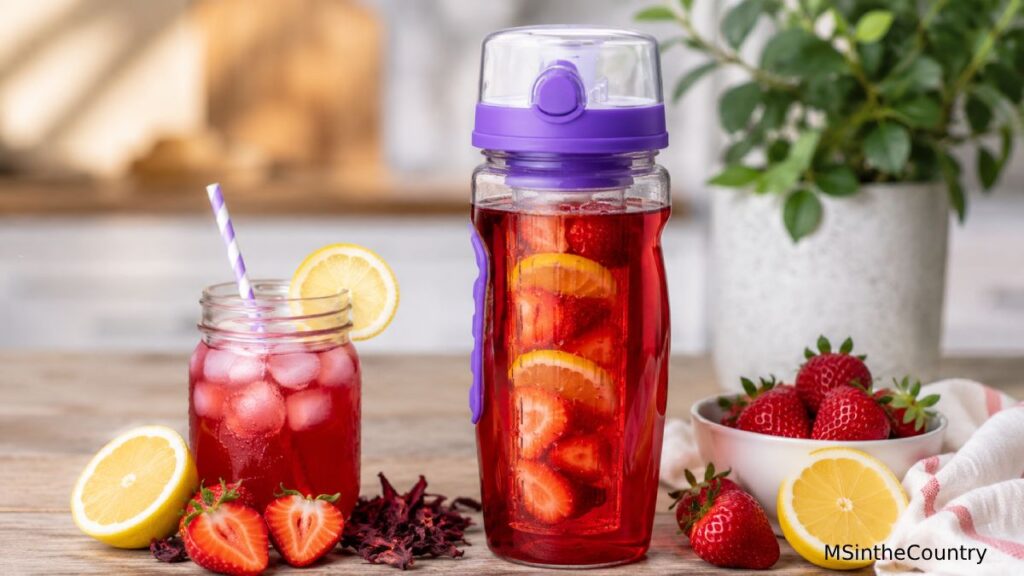
Strawberry Lemonade Herbal Cooler
A refreshing MS-friendly kombucha alternative that’s fruity, refreshing, and a genuinely enjoyable way to stay hydrated all day.
7. Should You Juice
I also love fresh juice combinations — cucumber and apple, cucumber apple mint, apple cucumber and beet, apple carrot and beet. They all taste wonderful. My honest experience, though, is that juicing takes a lot of energy, mostly in the cleanup. If you have the stamina for it on a good day, it’s worth doing. If not, don’t feel like you’re missing out — the other options in this post get you most of the same refreshment without the extra step.
Healing Tips
- Prep on a good day, drink on a hard day. Brew a big batch of herbal tea and keep it in the fridge so it’s ready to grab even on low-energy afternoons.
- Keep a cold drink within arm’s reach, especially wherever you rest most during the day. If you have to get up for it, you’re less likely to bother.
- Listen for your own version of the lemon water signal. Not every “healthy” ingredient agrees with every body. If something consistently causes an odd reaction, it’s worth dropping, even if it’s popular or well-regarded elsewhere.
- Pre-cool before you’re already overheated. A cold drink 15–20 minutes before you head outside can help you start from a cooler baseline.
- Rotate flavors weekly so you don’t get bored and drift back to sugary drinks out of sheer monotony.

❄️ Still trying to beat the heat?
Cold drinks are just one way I stay comfortable during the summer. Here are the cooling products that have made the biggest difference for me.
FAQ
What is the best cold drink for MS heat sensitivity? There isn’t one single “best” — it depends on what your body tolerates and what keeps you actually drinking enough fluids. Coconut water is a strong choice for electrolytes without added sugar, while herbal iced teas and fruit-infused water are gentle, low-effort options for all-day sipping.
Can cold drinks really help with Uhthoff’s phenomenon? Cold drinks won’t stop heat sensitivity from happening, but staying well-hydrated and helping your body cool down can reduce how often and how severely symptoms flare in hot weather.
Is kombucha safe for people with MS? It depends on the individual. Kombucha is fermented, and fermentation can increase histamine levels, which some people with MS or histamine sensitivity find aggravates symptoms like flushing or skin reactions. Others tolerate it fine. If you’re unsure, introduce it slowly and pay attention to how your body responds.
Why did lemon water cause a reaction for you specifically? I’m honestly not certain of the exact mechanism — it caused mild voice loss and throat clearing for me. I share it not as medical advice, but as an example of why it’s worth paying attention to your own body’s signals, even with ingredients that are considered universally healthy.
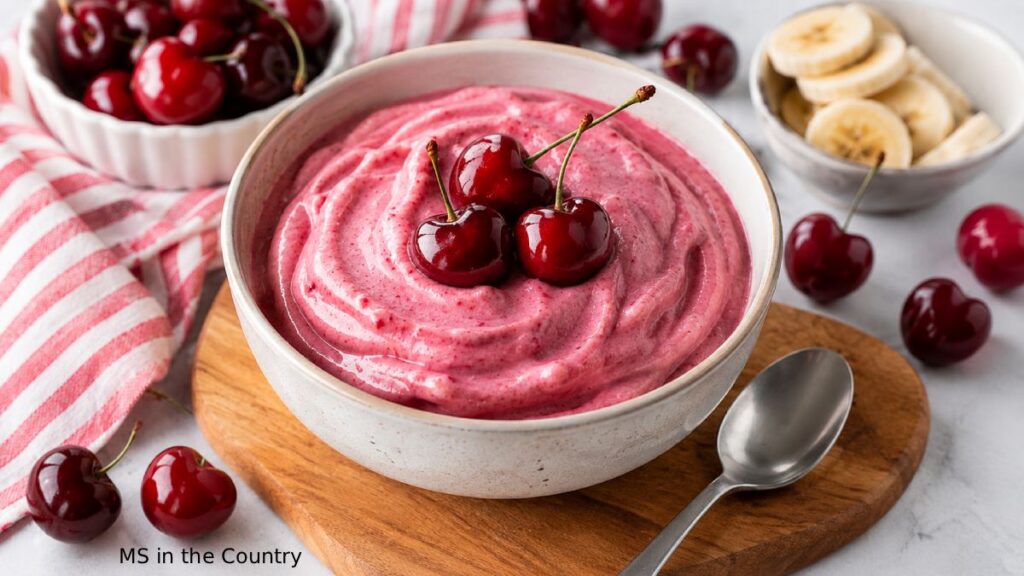
Looking for something creamy?
Cool off with this creamy, dairy-free Cherry Nice Cream made with just 3 simple ingredients.
⚡ Still struggling with MS fatigue?
Hydration can be one piece of the puzzle, but fatigue can have several different causes. My Energy Depleted Healing Guide walks through the patterns that may be draining your energy and simple steps you can try. Learn more →
💚 Enjoyed These Cold Drinks for MS?
Get more MS-friendly recipes, gentle healing tips, and simple wellness ideas delivered straight to your inbox.
📌 Love this 7 Best Cold Drinks for MS?
Save this pin for later! The Pinterest button is just below this image. 👇