
When it comes to gut health and MS, most people just want one simple answer: what do I eat? That was exactly where I was when I first changed my diet — overwhelmed, unsure, and just trying to heal. I didn’t make changes because it was easy. I made them because my body was struggling.
The week before Thanksgiving, I sat across from a catered meal that my family was thrilled about, and there was nothing on the table I could eat. Not because I was being dramatic. Because I was recovering from a flare so severe it had left me with double vision and trouble walking, and I had just changed my diet out of sheer desperation to get better.
So my husband and I unpacked the food, and I quietly scanned it all. There was one option for me: a small, sad salad. I sat there and smiled and acted happy. But inside, I wanted to cry. I wanted my old life back. I felt like I was being punished — and if you have MS, you know exactly the “why me” feeling I’m talking about.
That moment taught me that knowing what to avoid is not the same as knowing what to eat. I knew to skip gluten and dairy. But I had grown up eating packaged, processed food. I didn’t even know how to make macaroni and cheese from scratch. Nobody told me what gut health and MS actually looked like in real life.
That was over 20 years ago. And even today, with far more information available, most MS diet advice still sounds strict and confusing. This post is about what gut health and MS actually look like on your plate.
Why Gut Health Matters with MS
When it comes to gut health and MS, research is increasingly finding a connection between the gut microbiome and MS. Your gut and your nervous system are in constant communication, and when the gut is inflamed or out of balance, it can affect everything from energy levels to how your immune system behaves. Gut health and MS research are becoming increasingly connected, and it’s no longer a far-fetched idea.
But before you overhaul your diet, your body needs to calm down first. A calm nervous system supports better digestion, better energy, and a better environment for healing. That means the pressure you put on yourself about eating perfectly? It can actually work against you. Stress is one of the worst things for MS, and a rigid, complicated diet creates stress.
🌿 Healing Tip:
Start your morning with a warm glass of water with lemon before anything else. It’s a simple, gentle way to wake up your digestive system and support gut health and MS recovery from the very first moment of your day.
Signs Your Gut May Need Extra Support
If you’re dealing with gut health and MS, you might notice things like:
- Bloating or gas
- Constipation or loose stools
- Low energy
- Food sensitivities
- Brain fog
- Increased inflammation or discomfort
These are gentle signals from your body asking for support — not something to feel ashamed of. Small changes in what you eat and drink can make a meaningful difference over time.
Start Simple: What “Easy on the Gut” Actually Means
When your gut is inflamed or you’re in a recovery phase, starting with gentle, easy-to-digest foods gives your gut lining a chance to heal. This doesn’t mean boring or flavorless. It means warm, simple, real food that isn’t asking your digestive system to work overtime.
Think of it this way: your goal right now isn’t a gourmet meal. Your goal is food that feels safe and nourishing. Once your gut starts healing, you build from there. These are the kinds of meals I come back to again and again when I need to support my gut health and MS journey without the overwhelm.
Simple Gut-Healing Meals to Start With
Here are a few meals that are easy to make, gentle on the gut, and actually satisfying — no exotic ingredients, no expensive grocery hauls required.
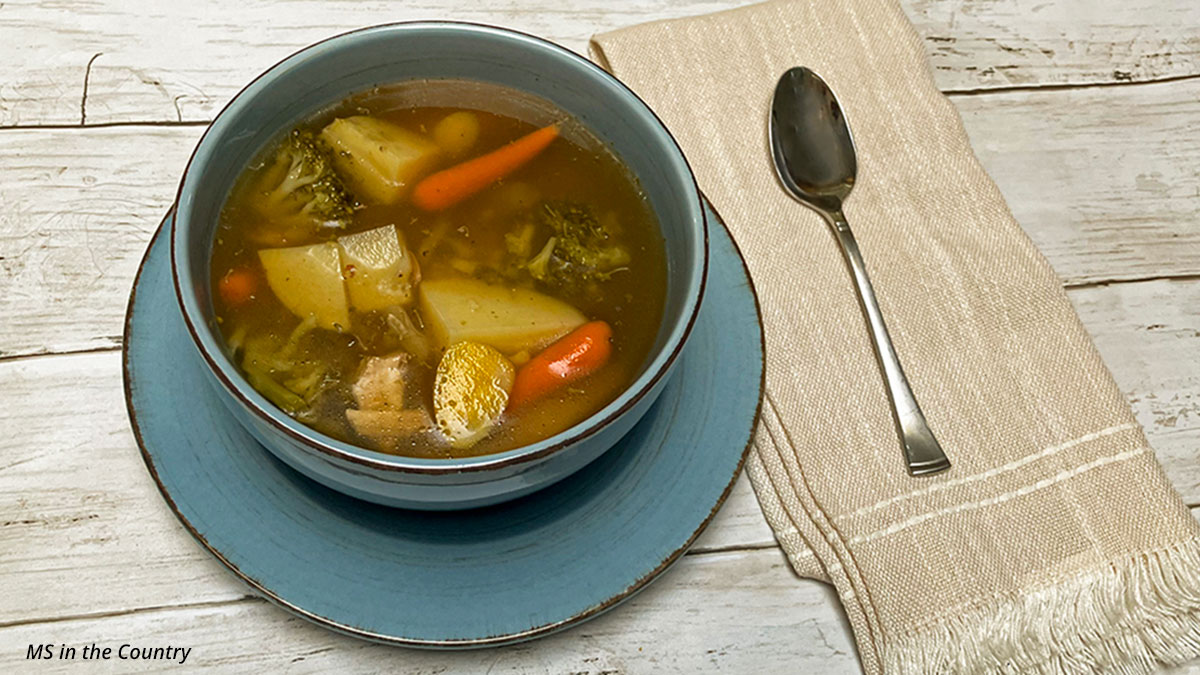
1. Simple Healing Vegetable Soup
This is one I make on cold winter days, and it takes almost no prep time at all. Grab a box of organic vegetable broth (I use Pacific brand), a bag of frozen Normandy vegetables (I get mine from Costco), and a few gold potatoes — gold potatoes have less starch than Russet, which makes them easier on digestion. Add your seasonings, simmer, and that’s it. Warm, satisfying, and genuinely healing. If you want something heartier, add some slow-cooked pasture-raised chicken, or toss in leftover chicken from the night before. The key is — keep it simple.
Feeling up to something a little more flavorful? My Easy Chicken Zoodle Soup is another gut-friendly option that’s worth the extra effort on a good day.
2. Steamed Veggie Bowl
Buy a bag of frozen vegetables. Just make sure the ingredient list says only vegetables, nothing added. Steam them, then drizzle with olive oil or top with sliced avocado, a pinch of sea salt, and garlic powder or herbs. That’s it. Soft, cooked vegetables are much easier on the gut than raw, and the healthy fat helps your body absorb nutrients. Soft veggies equal a happy gut.
🌿 Healing Tip:
Eating slowly and chewing well, since digestion actually starts in the mouth and that’s something most people don’t think about.
3. Baked Sweet Potato or Gold Potato
Bake or microwave a sweet potato or gold potato, then top it with whatever you have — steamed veggies, avocado, a drizzle of olive oil, sea salt. It’s warm, filling, and very grounding for the nervous system. Sweet potatoes are rich in fiber and antioxidants, and they’re one of the most gentle, nourishing foods you can eat. This one is a lifesaver when you have very little energy to cook.
4. A Simple Gut-Friendly Smoothie
On days when even boiling water feels like too much, a smoothie is your best friend. No cooking, no prep, just a few simple ingredients blended together. Try frozen berries, a banana, a handful of spinach (you won’t taste it, I promise), and coconut milk or almond milk. That’s it. It’s gentle on the gut, easy to get down even when you’re not feeling great, and it counts as a real meal. Some days this was all I could manage, and that was perfectly okay. Smoothies are one of my favorite ways to support gut health and MS recovery on hard days.
🌿 Healing Tip:
Add a tablespoon of ground flaxseed for extra gut-supporting fiber.
Focus on What You’re Adding, Not What You’re Removing
I do encourage removing gluten and dairy from your diet — especially dairy. Research suggests that people with MS who consume more dairy tend to experience more flares. But starting with a long list of restrictions is overwhelming and demoralizing. I know because I lived it.
Instead, try shifting your focus. Rather than thinking about what you can’t have, think about what you’re adding: colorful fruits, comforting soups, roasted vegetables, sweet potatoes, smoothies, and simple bowls. When I first went gluten-free, I felt like everything I loved had been taken away. But over time, I stopped thinking about what I’d given up and started building meals around foods that made me feel better. Vegetables and fruit became my main dish, not a boring side. And once that shift happened, eating this way stopped feeling like a punishment and started feeling like care.
Don’t Forget About Hydration
When we talk about gut health and MS, we often forget about what we’re drinking. Many people with MS back off on water because of bladder issues or frequent bathroom trips. That’s completely understandable. But hydration plays a huge role in digestion, detox, energy, and nervous system support.
Even mild dehydration can slow digestion, make constipation worse, and increase fatigue — all things many of us are already dealing with.
Here’s why staying hydrated matters for gut health and MS:
- Water helps move food through your digestive system
- It supports healthy bowel movements
- It helps your body flush out waste and toxins
- It supports circulation and nutrient delivery
- It keeps tissues (including your gut lining) moist and functioning well
And it doesn’t have to feel overwhelming.
Try small, gentle shifts:
- Sip water throughout the day instead of chugging
- Start your morning with a glass of warm water or lemon water
- Add hydrating foods like soup, fruits, and veggies
- Keep a cup nearby as a visual reminder
- Aim for progress, not perfection
Even one extra glass a day is a win. Your gut and your nervous system both need hydration to heal.
Gentle reminder
Healing doesn’t come from doing everything at once. It comes from small, steady choices. Start where you are. One sip. One meal. One kind choice for your body.
Those small shifts really do add up.
The Goal Isn’t Perfection — It’s Calm
Eating a rigid, all-or-nothing diet creates stress. And stress is one of the worst things for MS. Supporting your gut health and MS wellness doesn’t require a complicated plan or a hundred-dollar grocery trip. It requires simple meals, warm and easy foods, and releasing the pressure to do it perfectly.
When you eat in a calm, gentle way, you give your nervous system the safety it needs. And that’s where healing begins.
Start with one of the meals above this week. Just one. Your gut and your nervous system will thank you.
My meals look very different now than they did that Thanksgiving. I’m not standing over a sad salad anymore. I actually enjoy what I eat, and more importantly, I feel better eating this way. It didn’t happen overnight, and it won’t for you either, and that’s okay. Every simple meal you choose is a step forward. Be patient with yourself. Healing isn’t a race.
💌 Gut Health and MS: Small shifts can lead to big changes.
Join my MS in the Country newsletter for gentle reminders, gut health and MS healing tips, and encouragement to care for your body — one simple step at a time.
Leave a Reply