
Living with multiple sclerosis means navigating a symptom list that reads like a very unfunny joke. Brain fog? Check. Numbness in your feet? Check. Constipation that nobody warned you about? Oh, that’s definitely on the list. Muscle cramps that wake you up at 2 am? Also check.
MS has a lot of nerve (pun absolutely intended). Thankfully, some of the most helpful tools for managing MS symptoms are already sitting on the shelves at your grocery store, just waiting for you to add them to your cart. Many people are surprised to learn how much everyday foods for MS symptoms can support energy, digestion, nerve health, and muscle function. Many people underestimate how powerful foods for MS symptoms can be over time.
Now, before we dive in, I want to be crystal clear. I am not a doctor. I am not a nutritionist. I am a person who has MS, loves food, and has spent a questionable amount of time researching what to eat so I can feel a little better on the tough days. These foods are not a cure. They are not magic. But they can be genuinely supportive, and honestly? Eating well is one of the few things in the MS journey that we actually get to control. How do I know? I’ve been using food to manage my MS for over 20 years.
There’s no strict diet here. No rules. No foods to banish forever (unless you want to — you do you). Below is just a fun, practical guide to foods for MS symptoms that might make your days feel a little more manageable. And maybe even a little more delicious.
Let’s get into it! 🛒
What You’ll Learn in This Guide
🧠 Brain Fog: Foods for MS Symptoms That Support Mental Clarity
You walked into the kitchen. You stood there. You have absolutely no idea why you came in. You go back to the couch. You remember. You walk back to the kitchen. You forget again.
Brain fog is one of the most common and most maddening MS symptoms out there — and it’s invisible, which makes it even harder because nobody else can see it happening. It’s not laziness. It’s not “just being tired.” It’s a real neurological symptom, and it deserves to be taken seriously.
While food can’t reboot your brain like a computer (wouldn’t that be nice), certain nutrients are known to support brain health, reduce inflammation, and protect those precious nerve cells.
Your brain fog grocery list:
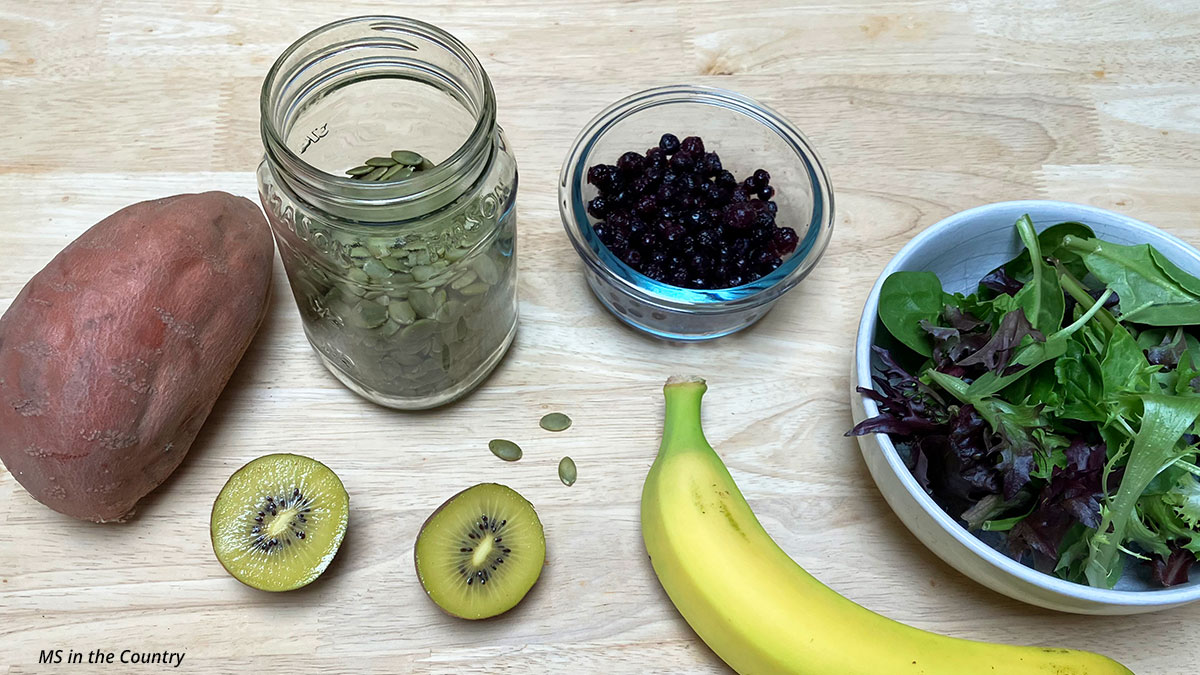
• Blueberries: Think of these tiny blue gems as bodyguards for your brain. They’re loaded with antioxidants called flavonoids that help protect brain cells from oxidative stress and inflammation. Pop a handful on your oatmeal, blend them into a smoothie, or just eat them straight from the container while standing in front of the fridge. No judgment here.
• Fatty fish (salmon, mackerel, sardines): Omega-3 fatty acids are the rockstars of brain nutrition. They help build and maintain brain cell membranes and have powerful anti-inflammatory properties. If you’re not a fish fan, walnuts and flaxseeds are solid plant-based alternatives.
• Leafy greens (spinach, kale, arugula): High in folate, vitamin K, and antioxidants that support memory and cognitive function. “But I don’t like salad.” That’s fine! Blend a big handful of spinach into a fruit smoothie. You will not taste it. I promise. (Okay, you might taste it a tiny bit. Add more banana.)
• Turmeric: The golden superstar of the spice world. Curcumin, its active ingredient, is a potent anti-inflammatory and antioxidant that has been studied for its potential brain-protective effects. Stir it into soups, sprinkle it on roasted veggies, or make yourself a cozy golden milk latte. It tastes like a hug.
- Dark chocolate (70%+ cocoa): You’re welcome. Dark chocolate contains flavanols that improve blood flow to the brain. This is a scientific fact. Enjoy responsibly. Or not. You’ve been dealing with MS — you’ve earned it.
🌿 Healing Tip:
Not all dark chocolate is created equal! Some brands have been found to contain high levels of heavy metals like lead and cadmium. Look for brands that have been third-party tested. Consumer Reports has a helpful guide on safer choices.
🦶 Numbness & Tingling in Your Feet: The Pins and Needles Party Nobody Asked For
Numbness and tingling are among the most classic MS symptoms, and one of the first symptoms many people notice before they even have a diagnosis. That “my foot fell asleep” feeling, except your foot did not fall asleep. It just… decided to do its own thing.
Nerve damage is complicated, andnourishing your nervous system with the right nutrients is always a smart strategy. Think of it as giving your nerves the best possible environment to function in.
Your nerve-nourishing grocery list:
- Vitamin D-rich foods (salmon, fortified orange juice, fortified non-dairy milk such as almond or oat milk): People with MS have a notoriously complicated relationship with vitamin D. Low levels are extremely common, and vitamin D plays a role in immune regulation and nerve health. Food sources aren’t always helpful, especially in winter when sunlight is scarce. Talk to your doctor about your levels — many MS patients supplement as well. I take Thorne vitamin D + K2.
🌿 Healing Tip:
Most people with MS are vitamin D-deficient. Ask your neurologist to test your levels — many of us need a supplement to reach the optimal range. You can learn more here.
• Avocados: Beyond being delicious on literally everything, avocados are rich in B vitamins (especially B6) and healthy monounsaturated fats that support proper nerve function. Also, magnesium and potassium. Honestly, avocados are showing off at this point.
• Walnuts: Another great plant-based omega-3 source. The myelin sheath (the protective coating around your nerves — the one MS attacks) is largely made of fat, so healthy fats matter a lot. A small handful of walnuts as a snack is a simple, effective habit.
• Ginger: Fresh ginger has anti-inflammatory properties, and some research suggests it may help ease nerve-related pain. Slice it fresh into hot water for a simple ginger tea, add it to stir-fries, or blend it into smoothies. It’s zingy, and it means business.
🚽 Constipation: The Symptom We Don’t Talk About Enough (But We’re Talking About It Now)
Alright, friends. We’re doing this. We’re talking about constipation. Because it’s one of the most common digestive issues people with MS deal with (affecting up to 60% of us), and yet it’s somehow still taboo to mention.
MS can slow down the muscles that control your bowels, and some medications make things worse. The result? Things get… stuck. It’s uncomfortable, it can cause pain and bloating, and it affects your quality of life in a very real way. So let’s eat our way to better days, shall we? Certain foods for MS symptoms can gently support digestion and help keep things moving more comfortably.
Your digestive happiness grocery list:
• Prunes (and prune juice): Yes, prunes. The classic remedy that your grandmother swore by, and guess what? She was right. Prunes are high in insoluble fiber AND contain a natural compound called sorbitol that acts as a gentle laxative. They work. Eat them. You can even blend them into smoothies if eating them plain feels too “retirement home” for you.
• Fermented foods (coconut yogurt, sauerkraut, kimchi, kombucha): Your gut is home to trillions of bacteria, and keeping them happy keeps your digestion moving. Probiotics from fermented foods help increase good gut bacteria, reduce inflammation, and support regular bowel movements. Plus, kimchi is delicious and makes everything taste better.
• Flaxseed: Ground flaxseed is a fiber AND omega-3 double threat. Sprinkle it on your oatmeal, mix it into yogurt, or add it to smoothies. It’s virtually tasteless and incredibly effective. Buy the ground version — whole flaxseeds pass right through without much benefit.
- Kiwi fruit: Here’s a fun one! Studies show that eating two kiwis a day can significantly improve constipation. They contain a special enzyme called actinidin that helps move things along. And they’re delicious. Consider kiwi your new best friend.
• Water: This one’s not food, but it’s critical enough to mention. Fiber draws water into your bowels to soften stool, but if you’re not drinking enough water, fiber can actually make constipation worse. Aim for at least 8 glasses a day. Add lemon if plain water bores you.
🌿 Healing Tip:
Try drinking a glass of warm lemon water first thing in the morning before coffee or food. It gently wakes up your digestive system and counts toward your daily water intake!
🍌 Muscle Cramps & Spasticity: Go Bananas (Literally)
If you’ve ever been jolted awake at 2 am by a muscle cramp so intense you had to sit up in bed and massage your leg while waiting for the pain to slowly let go, then this section is for you.
Muscle cramps and spasticity (that tight, stiff, sometimes painful muscle stiffness) are incredibly common with MS. The nervous system misfires, muscles get confused, and the result ranges from mildly annoying to seriously disruptive. Certain minerals play a huge role in muscle function, and many of us aren’t getting enough of them. Choosing the right foods for MS symptoms can help support muscle relaxation and reduce nighttime cramping.
Your “please stop cramping” grocery list:
- Bananas: The MVP of this whole list. Bananas are rich in potassium and magnesium, both of which are essential for proper muscle contraction and relaxation. When muscles cramp, electrolyte imbalance is often a factor. Have a banana a day as a snack. It’s cheap, it’s easy, and it actually works. Athletes eat them for a reason.
🌿 Healing Tip:
Keep a banana on your nightstand if nighttime cramps are a regular visitor. Having one within reach at 2 am is a lot easier than hunting through the kitchen half asleep!
• Sweet potatoes: Another potassium powerhouse. One medium sweet potato has more potassium than a banana, plus magnesium, calcium, and vitamin B6. Roast them, mash them, make fries, stuff them, turn them into soup (sweet potatoes are extremely versatile and extremely good for you).
• Magnesium-rich foods (dark leafy greens, almonds, pumpkin seeds): Magnesium is sometimes called “nature’s muscle relaxer,” and people with MS are frequently low in it. Dark chocolate also counts here. (Yes, dark chocolate appears twice in this post. You’re welcome.)
• Tart cherry juice: Tart cherries are rich in anti-inflammatory compounds and have been shown in research to help reduce muscle soreness and cramping. Athletes use it for recovery. It’s delicious mixed with sparkling water as a mocktail. Fancy AND functional.
• Green tea: Some research suggests green tea may help with muscle weakness and fatigue thanks to its antioxidant and anti-inflammatory properties. It also gives you a gentle caffeine lift without the jitters of coffee — a helpful middle ground on fatigue days.
The Big Picture: Eat Real, Feel Better (Most Days)
When it comes to managing MS symptoms, choosing supportive foods for MS symptoms isn’t about being perfect. It’s not about stressing if you’re eating clean 100% of the time or never touching a slice of pizza again (I enjoy eating gluten-free, dairy-free pizza). It’s about adding more good stuff, more consistently, in a way that’s actually sustainable for your real life.
A few patterns you’ll notice across all these food lists: anti-inflammatory foods keep showing up (blueberries, turmeric, fatty fish, ginger). Fiber-rich foods keep showing up. Healthy fats keep showing up. These aren’t coincidences — they reflect what the research consistently points to as supportive for people managing chronic inflammatory conditions like MS.
You don’t have to overhaul everything at once. Start small. This week, add blueberries to your breakfast. Next week, add flaxseeds to your smoothie. The week after, try golden milk before bed. Tiny swaps, made consistently, create real change over time. Building meals around foods for MS symptoms is one simple way to support your body daily.
And on the days when you eat something easy instead of cooking because MS is exhausting and cooking feels impossible? That’s okay too. You’re doing great. Seriously.
🌿 Healing Tip:
Small changes add up! You don’t have to eat perfectly every day. Even adding one or two of these foods a week is a step in the right direction.
Quick Reference: Foods for MS Symptoms at a Glance
- Brain fog: Blueberries, fatty fish, leafy greens, turmeric, dark chocolate
- Numbness & tingling: Vitamin D foods, avocado, walnuts, ginger
- Constipation: Prunes, fermented foods, flaxseed, kiwi, water
- Muscle cramps: Bananas, sweet potatoes, magnesium-rich foods, tart cherry juice, green tea
💬 Your turn! What foods have made a difference for you? Have you tried any of these? Drop a comment below — the MS community is better when we share what works. And if this post helped you, share it with someone who might need it this MS Awareness Month!
If you’re ready to go beyond foods for MS symptoms and build daily habits that truly support healing…
🌿 Explore My MS Healing Guides
Leave a Reply