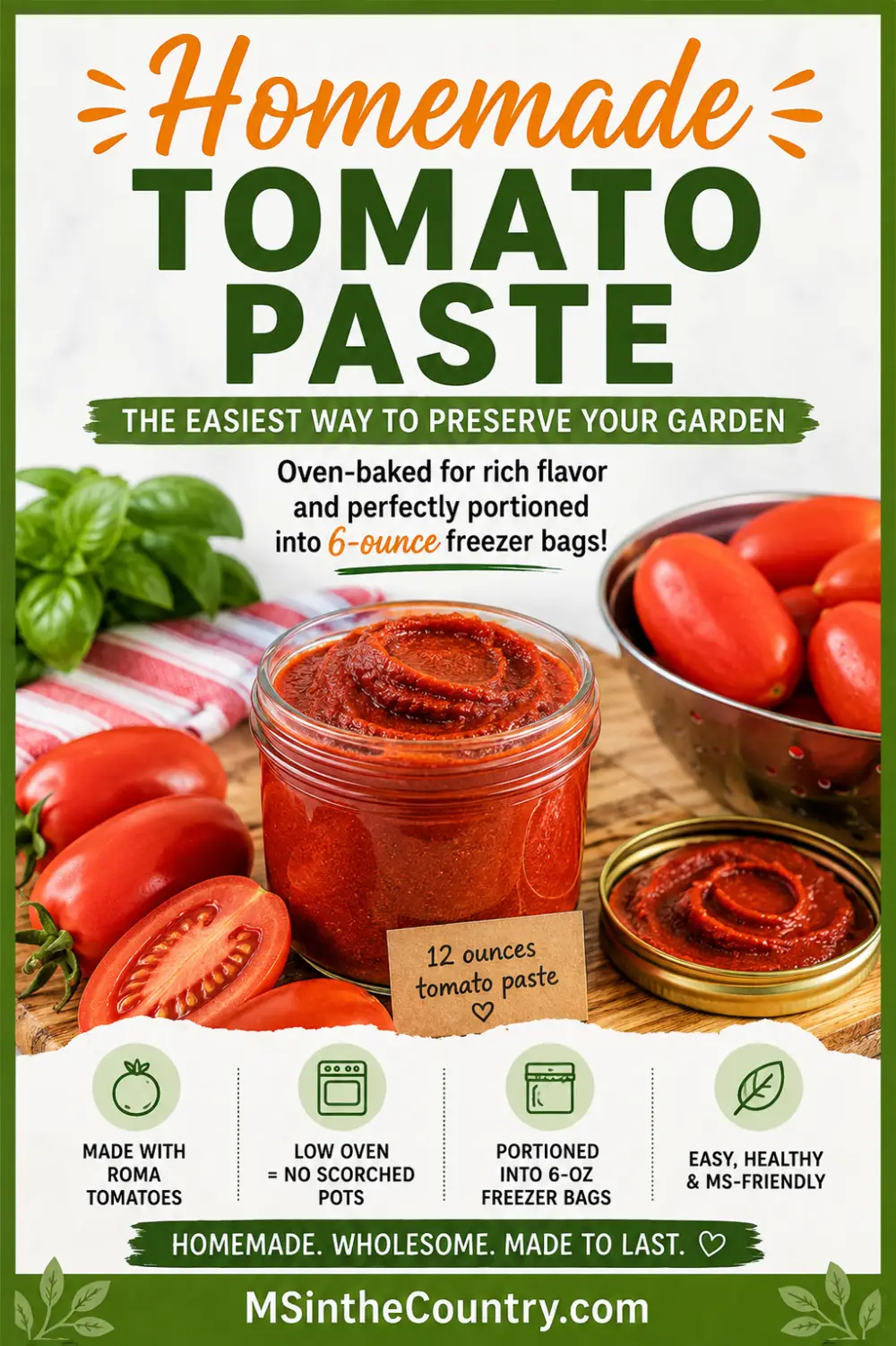
A simple homemade tomato paste recipe made with Roma tomatoes, portioned into freezer bags so every batch matches a store-bought can — no citric acid, no scorched pots, just a low, slow oven doing the work.
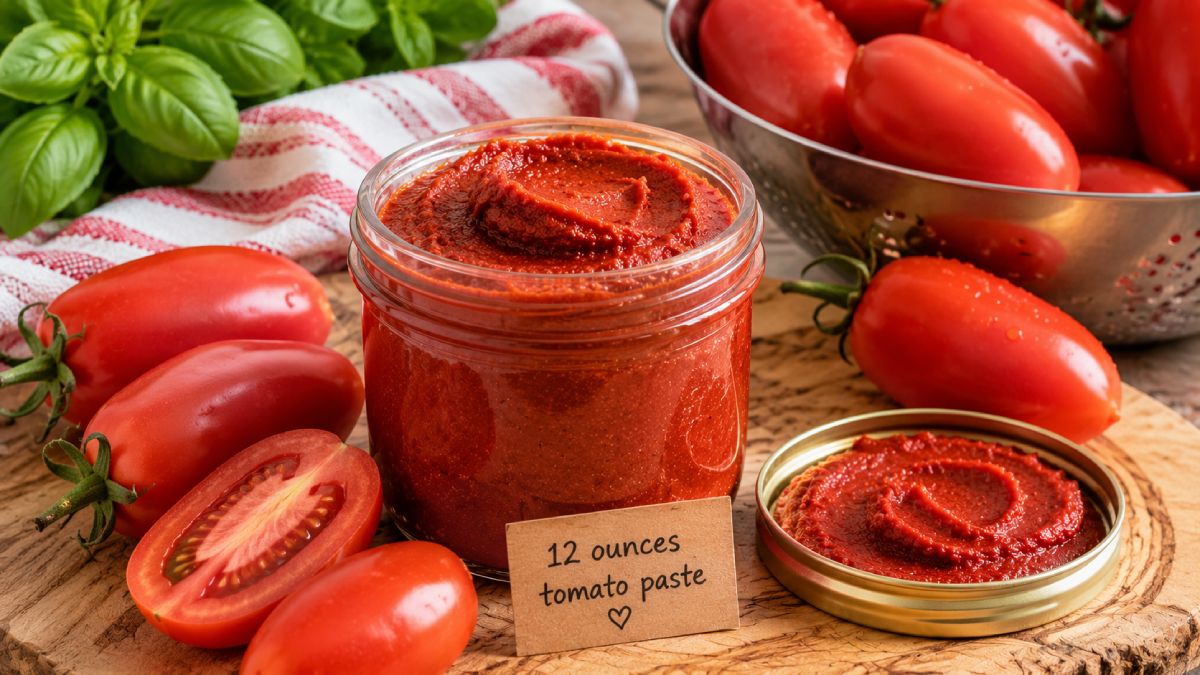
This is the first year I’ve made my own homemade tomato paste using round, juicier slicing tomatoes rather than Romas; it happened by accident.
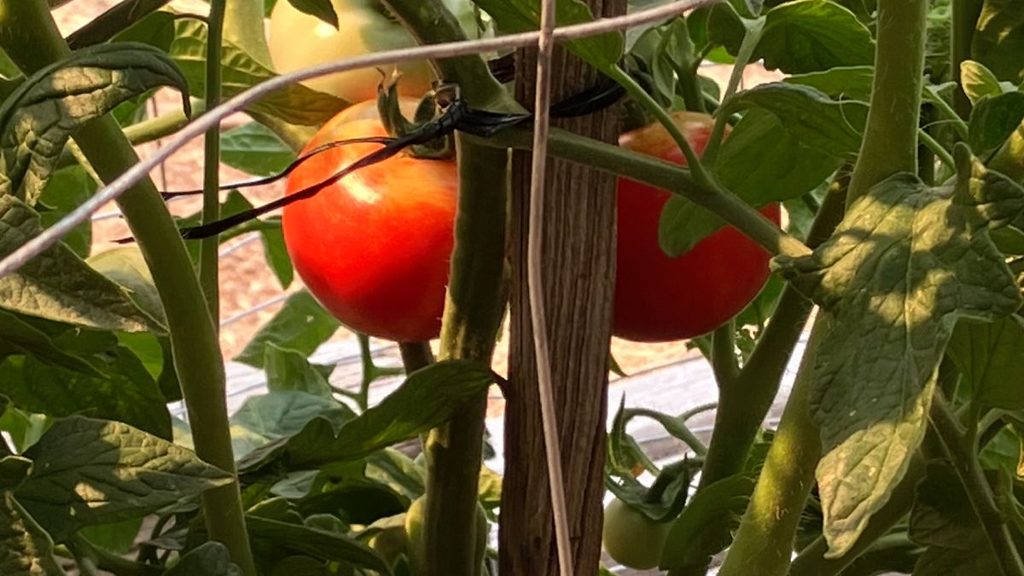
My husband and I usually buy our tomato plants from the big box stores. This year, we decided to try something different and bought them from our local farmer’s market instead. Wow. What a difference. These are, hands down, the best tomato plants we have ever grown. One single plant — the one you see in the photo below — has over 30 tomatoes on it right now, with more flowers still coming. We planted both red and orange tomatoes this year, although the red ones have been much more productive. We didn’t even grow Roma tomatoes this year. Next year, we will.
Getting here wasn’t easy, though. Early in the season, we were under siege. First it was rabbits, munching their way through everything low to the ground. Then starlings moved in. Then came the voles — and if you’ve never dealt with a vole invasion, count yourself lucky. We tried everything to stop them, and they still wiped out a good portion of our garden.
But they never touched the tomato plants.
So now I have more tomatoes than I know what to do with, and the most practical thing to do with an overflow of tomatoes is turn them into paste — the kind you can pull out of the freezer all winter for soups, sauces, and stews.
Jump to Recipe…
Why Homemade Tomato Paste Works for MS
Homemade tomato paste is naturally rich in lycopene, the antioxidant that gives tomatoes their deep red color. Cooking tomatoes down concentrates it, which is part of why tomato paste has a much higher lycopene content than a fresh tomato does, ounce for ounce. Research on lycopene has looked at its role in reducing oxidative stress and calming inflammatory pathways in the body — two things that matter a great deal when you’re managing MS naturally. One review of the research on lycopene’s antioxidant properties found it may help with oxidative stress-related conditions, including inflammatory and nervous system disorders (source: PMC, National Library of Medicine).
This recipe is also fatigue-friendly by design. Instead of standing over a hot stove stirring a pot for hours, the oven does the work for you. You get the tomatoes prepped and into the pan, and then you’re free to sit down, rest, or do something else entirely while it cooks low and slow.
🌿 Healing Tip:
Lycopene is fat-soluble, which means your body absorbs more of it when tomatoes are cooked and paired with a little healthy fat — a drizzle of olive oil when you use the paste later is an easy way to get more out of it.
Why I Use Roma Tomatoes
For this recipe, I specifically use Roma tomatoes, and it’s not just habit — they’re genuinely the easiest tomato for making paste at home.
Roma tomatoes have thicker skin, which makes them easier to peel than a thin-skinned slicing tomato. They also have far fewer seeds and much less watery juice inside, which means less prep work and a faster path to a thick, spreadable paste. With juicier, seedier tomatoes, you’re fighting extra liquid the entire time you cook — with Romas, you’re not.
If you’re growing your own and didn’t plant Romas this year (we didn’t either!), don’t worry — I’ve included notes below for adapting this recipe to juicier garden tomatoes. It just takes a little longer.
Why the Oven (Not the Stovetop)
Traditionally, tomato paste is made by simmering tomatoes down on the stovetop, which means standing nearby, stirring frequently, and watching closely so the bottom doesn’t scorch as the mixture thickens. For anyone managing MS — especially on a day when standing for long periods or gripping a spoon for an hour isn’t realistic — that’s a real barrier.
Using a low oven instead solves this. The heat surrounds the pan evenly, so you don’t need to stir constantly, and there’s no single hot spot on the bottom of a pot to cause scorching. You can prep everything, slide it into the oven, and check on it every 30–45 minutes instead of standing over it the whole time.
A Note on Buying Organic Tomato Paste
Even though I’m making my own this year, I want to share what I look for when I do buy tomato paste, because it matters just as much as growing it yourself.
When I buy organic tomato paste, I always check the ingredient label for citric acid. Despite the name, citric acid used in food manufacturing typically isn’t extracted from citrus fruit — it’s produced through a fermentation process using a strain of black mold. I personally avoid it, so I read labels carefully.
My go-to is Simple Truth organic tomato paste in a tube, not the can, because the tube version doesn’t contain citric acid. If I can’t find it locally, I order it from Amazon instead. I’ll link the one I buy here.
If You’re Using Juicier Garden Tomatoes Instead
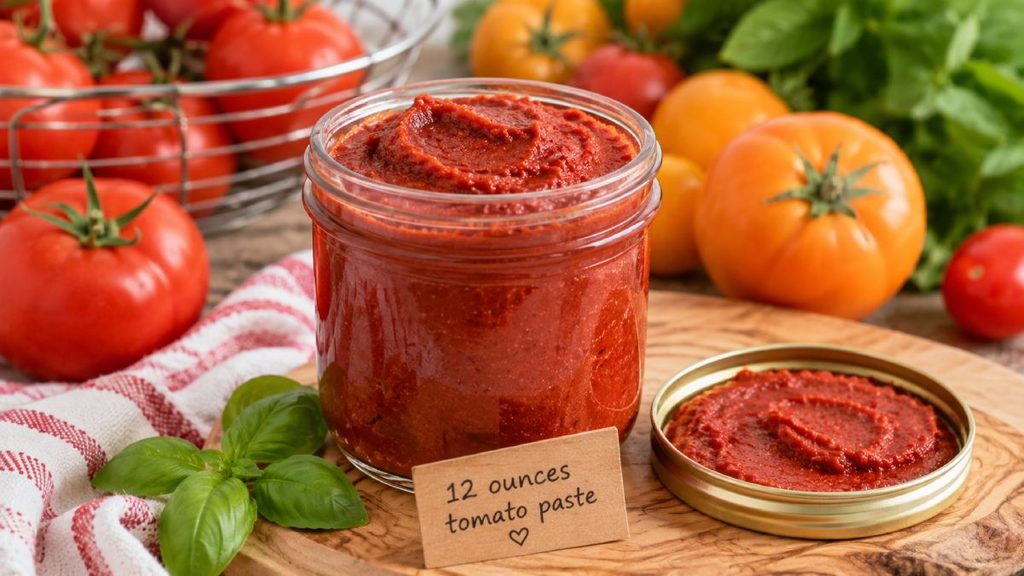
This year, most of what’s coming out of our garden isn’t Romas — we’re growing round, juicier slicing tomatoes instead. If you’re in the same boat and want to use whatever’s ripening on your own vines, here’s what to adjust:
- Remove the excess juice and seeds first. Cut the tomatoes in half and gently squeeze out the seeds and watery juice before cooking, or run the cores through a food mill after a quick simmer. Skipping this step means a lot of extra liquid you’ll have to cook off later.
- Plan for a longer cook time. Because there’s more liquid to evaporate, expect to add roughly 1 to 2 extra hours in the oven compared to the Roma tomato method below, depending on how juicy your tomatoes are.
- Stir more often. Check and stir every 20–30 minutes instead of every 45 minutes, especially in the last hour, since a wetter mixture is more prone to uneven cooking as it thickens.
- Watch the edges of the pan. The outer edges of the tomato mixture will dry out and thicken faster than the center. Stirring pulls the thicker paste from the edges back into the middle so nothing scorches.
- Expect a slightly less concentrated paste. Even with a longer cook time, a juicier, seedier tomato won’t reduce down quite as thick as a Roma will. That’s completely fine — it will still work beautifully in soups, sauces, and stews.
My Freeze-in-Portions System
However you make your tomato paste, the most useful part of this whole project is how you freeze it.
Store-bought tomato paste cans are 6 ounces, so I portion my homemade paste into 6-ounce amounts using my kitchen food scale, then freeze each portion in its own bag. I’ll link the food scale I use here. That way, whenever a recipe calls for “one can of tomato paste,” I just grab one bag from the freezer — no guessing, no measuring, no thawing more than you need.
I use Ziploc Freezer Slider Quart Size Bags for this, since they’re BPA-free and the slider makes them easy to open one-handed, which matters on days when your hands aren’t cooperating. I press the paste flat in the bag before sealing, so it freezes quickly and thaws even faster.
This is the exact same system I use for freezing bananas — one bag, one banana, portioned and ready whenever a recipe or a smoothie calls for it. Once you set up a system like this, it makes cooking from the freezer so much easier.
Common Questions
Do I have to peel the tomatoes first? For the smoothest paste, yes. Roma tomatoes peel easily after a quick blanch in boiling water for about 30–60 seconds, followed by an ice bath — the skins slip right off.
How long does homemade tomato paste last in the freezer? Frozen in a sealed freezer bag with the air pressed out, it keeps well for up to 6 months, and up to a year if your freezer stays consistently cold.
Can I use a slow cooker instead of the oven? You can, but the oven gives you more even, hands-off heat and better evaporation since the lid stays off. A slow cooker traps steam, so your paste will take much longer to thicken.
How many Roma tomatoes do I need for one 6-ounce portion? It varies by tomato size and moisture content, but plan on roughly 2 to 2.5 pounds of fresh Roma tomatoes for every 6 ounces of finished paste, since the water cooks out almost entirely.
Is this recipe good on a fatigue day? Yes — that’s a big part of why I switched to the oven method. Once the tomatoes are prepped and in the pan, there’s no active stirring or standing required. Check on it every 30–45 minutes, and rest in between.
Ways to Use Homemade Tomato Paste
Homemade tomato paste is one of those ingredients that’s handy to keep in the freezer. A little can add richer tomato flavor to all kinds of meals.
- Sloppy Joes — tomato paste adds rich tomato flavor and helps create a thick sauce that clings to the meat. Try it in my Homemade Sloppy Joes recipe.
- Pizza sauce — use tomato paste as the base for a quick, thick pizza sauce that won’t make your crust soggy.
- Enchilada sauce — use tomato paste as the base for an easy homemade red enchilada sauce.
- Taco meat or taco bowls — stir a little into seasoned ground beef or turkey for deeper tomato flavor.
- Stuffed peppers — add some to the filling or use it to make a tomato sauce for spooning over the top.
- Chili — tomato paste adds concentrated tomato flavor and helps thicken chili.
- Vegetable soup — stir a spoonful into the broth for a richer tomato base.
- Beef and vegetable soup — especially good with potatoes, carrots, green beans, and herbs.
- Spaghetti or meat sauce — add tomato paste to your tomato sauce for a deeper, richer flavor.
- Meatballs — use it to make a rich tomato sauce for meatballs if you eventually add an egg-free meatball recipe.
- Cabbage rolls or an unstuffed cabbage skillet — tomato paste can help create the tomato sauce that goes so well with cabbage and ground meat.
- Lasagna-style zucchini bake — use it to make a thick tomato sauce for layering with zucchini and a dairy-free filling.
- Spanish-style rice — a little tomato paste adds color and concentrated tomato flavor without adding much liquid.
- One-pan chicken — combine it with liquid and seasonings to make an easy tomato sauce for chicken and vegetables.
- Homemade barbecue sauce — tomato paste makes a great thick tomato base without having to start with ketchup.
- Tomato dipping sauce — thin and season it to make a simple dipping sauce for vegetables, potatoes, or other savory foods.
Homemade Tomato Paste Ingredients
- 5 pounds Roma tomatoes
- 1 tablespoon olive oil (for the pan)
- Pinch of sea salt (optional)
This homemade tomato paste recipe has become my favorite way to use up an overflowing garden — no scorched pots, no standing over the stove, and a freezer stocked with perfectly portioned paste for the whole winter. If you try it, let me know in the comments whether you used Romas or a juicier garden variety!
Recipe
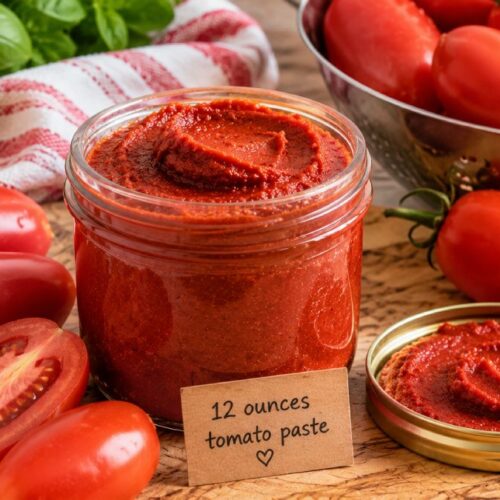
Homemade Tomato Paste Recipe
Equipment
- Large pot (for blanching)
- Large bowl of ice water
- Food processor or blender
- Fine mesh strainer or food mill
- Large rimmed baking sheet or shallow roasting pan
- Kitchen food scale
- Ziploc Freezer Slider Quart Size Bags (BPA-free)
Ingredients
- 5 pounds Roma tomatoes
- 1 tablespoon olive oil (for the pan)
- Pinch sea salt (optional)
Instructions
- Preheat the oven to 250°F (120°C).
- Bring a large pot of water to a boil. Score a small X on the bottom of each tomato, then blanch in batches for 30–60 seconds until the skins begin to split.
- Transfer the tomatoes immediately to a bowl of ice water. Once cool, slip off the skins and discard.
- Core and roughly chop the peeled tomatoes, then blend in a food processor or blender until smooth.
- Pour the puree through a fine mesh strainer or food mill to remove the seeds, pressing to extract as much pulp as possible.
- Lightly oil a large rimmed baking sheet or shallow roasting pan and pour in the strained tomato puree, spreading it into an even layer no more than ½-inch deep.
- Place in the oven uncovered and cook for 3 to 4 hours, stirring every 30–45 minutes to prevent a skin from forming and to keep it cooking evenly. The paste is done when it’s thick, deep red, and holds its shape on a spoon.
- Season with a pinch of sea salt if desired. Let cool completely.
- Using a food scale, portion the cooled paste into 6-ounce amounts — one portion per freezer bag, matching a standard store-bought can.
- Spoon each portion into a Ziploc Freezer Slider Quart Size Bag, press flat to remove excess air, seal, and label with the date.
- Freeze flat for up to 6 months (up to a year in a consistently cold freezer).
Notes
- Using juicier, seedier garden tomatoes instead of Romas? Remove the seeds and excess juice before cooking, add 1–2 extra hours in the oven, and stir every 20–30 minutes rather than every 45. See the full notes above.
- Buy organic tomatoes when possible to reduce pesticide exposure.
- If you’d rather buy tomato paste than make it, look for one without citric acid on the label — I use Simple Truth organic tomato paste in a tube.
- Freezing in 6-ounce portions means every bag equals one store-bought can — no measuring required when a recipe calls for it later.
- This is the same portion-and-freeze method I use for frozen bananas — one bag, one banana.
🧩 Not sure why your MS symptoms aren’t improving?
Discover which of the four MS healing patterns best matches your symptoms with my free Find Your Root Cause of MS guide. When you subscribe, you’ll also receive my weekly newsletter filled with practical, research-backed tips. Get your FREE guide here →
Looking for More Homemade Sauces & Dressings?
If you enjoyed this Homemade Tomato Paste Recipe, browse more of my homemade sauces and dressings made with simple, wholesome ingredients.
🧩 Still Trying to Figure Out Your MS Symptoms?
Download my free Find Your Root Cause of MS guide to discover which healing pattern best matches your symptoms. You’ll also be subscribed to my free weekly MS in the Country newsletter, where I share whole-food recipes, practical MS tips, and new articles to help you live better with MS. Sign up below 👇
📌 Love this Homemade Tomato Paste recipe?
Save this pin for later! The Pinterest button is just below this image. 👇