
Fresh-squeezed orange juice and raw honey — that’s it. One simple glaze that works on salads, roasted vegetables, salmon, smoothies, and more.
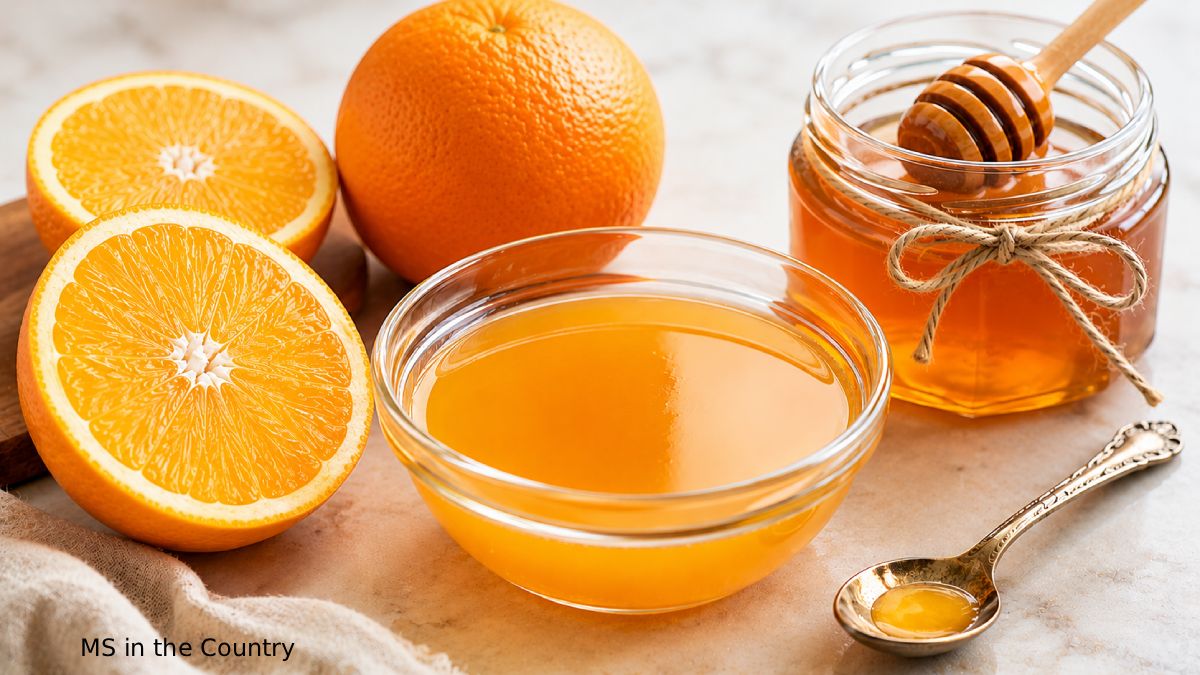
This honey orange glaze started as something I threw together because I needed a dressing and didn’t want to make a complicated sauce.
Fresh orange juice. Raw honey. Stir. Done.
I wasn’t expecting much — but the combination of bright citrus and gentle sweetness turned out to be one of the most versatile things I keep in my refrigerator. It works on everything. Salads, fruit salads, roasted vegetables, salmon, smoothies. And if you stir it into cold almond milk with ice and a splash of vanilla extract, it tastes remarkably similar to an Orange Julius — which was a very welcome discovery.
The other thing I love about this recipe is how I make it. I juice several oranges at once — enough to last a few days — and store the juice in a glass jar in the refrigerator. Then I add the honey when I need it. That way the hard part is already done when I’m ready to cook. And if a few days pass and I haven’t used it for a recipe, I just drink the orange juice before it goes bad. Nothing wasted.
Two ingredients. Endless uses. Zero wasted energy.
Jump to…
Jump to…
- Why This Honey Orange Glaze Works for MS
- Why Every Ingredient Earns Its Place
- Ways to Use It
- A Note on Pork
- Tips for the Best Results
- Common Questions
- Recipe
Why This Honey Orange Glaze Works for MS
Managing MS naturally means finding ways to add nutrition and flavor to meals without adding inflammatory ingredients. Most store-bought dressings, glazes, and sauces are loaded with refined sugar, processed oils, preservatives, and ingredients that work against an anti-inflammatory diet.
This honey orange glaze has two ingredients — both of which actively support your body rather than working against it. Fresh orange juice brings vitamin C, folate, and potassium. Raw honey brings natural antioxidants and a sweetness that doesn’t spike blood sugar the way refined sugar does. Together they create something bright, balanced, and genuinely nourishing.
It also requires almost no energy to make, which matters on the days when cooking from scratch feels like too much. Juice the oranges when you have the energy, store the juice in the refrigerator, and the glaze is always just a spoonful of honey away.
🌿 Healing Tip:
Fresh orange juice is one of the best dietary sources of vitamin C — a critical antioxidant for people with MS. Vitamin C supports immune regulation, helps the body synthesize collagen for connective tissue, and enhances iron absorption from vegetables and other plant foods. It also plays a role in reducing oxidative stress, which contributes to nerve damage in MS. Getting vitamin C from whole food sources like fresh-squeezed orange juice rather than supplements means you’re also getting folate, potassium, and flavonoids that work together rather than in isolation.
Why Every Ingredient Earns Its Place
Fresh-squeezed orange juice: The foundation of this glaze and the reason it tastes so bright and alive. Fresh-squeezed is noticeably better than store-bought — the flavor is more vibrant, the vitamin C content is higher, and there are no additives or preservatives. I juice several oranges at once and store the juice in a glass jar in the refrigerator, so I always have it ready without having to juice every time I cook.
Raw honey: Just a small amount — two teaspoons for a salad dressing, up to a tablespoon for roasted vegetables — adds natural sweetness that balances the acidity of the orange juice perfectly. Raw honey retains trace enzymes, antioxidants, and antimicrobial properties that processed honey loses. Adjust the amount to your taste and the dish you’re making.
Ways to Use It
The ratio stays the same — ¼ cup orange juice to 2 teaspoons honey as a starting point — but how you use it changes completely depending on what you’re making. Here are my favorite applications, with more detailed recipes coming soon:
On salads. This is where I use it most often. Drizzle it over a simple green salad, and it brightens every ingredient without overpowering anything. It’s especially good with salads that include fruit — apple slices, mandarin segments, or dried cranberries. If you use dried cranberries, always read the ingredient label first. Many brands add sugar, oils, and preservatives you don’t need. I use Herbaila Dried Cranberries — the only ingredient is dried cranberries.
On fruit salads. A light drizzle over a bowl of fresh fruit adds a floral, citrusy note that makes the whole thing taste more intentional. No additional dressing needed.
On roasted vegetables. This is where the glaze really shines. For Brussels sprouts, I increase the honey to about 1 tablespoon per 1½ pounds of vegetables — the extra sweetness balances the bitterness of the sprouts beautifully. I’ve also added a little garlic and red pepper flakes for heat, and a splash of coconut aminos for depth. Roasted carrots, sweet potatoes, and broccoli are all wonderful with this glaze.
On salmon. Brush it over salmon before roasting or add it during the last few minutes of cooking. The orange and honey caramelize slightly and give the salmon a beautiful glaze. A splash of coconut aminos added to the mix takes it in a savory-sweet direction that’s really satisfying. Always choose wild-caught salmon for the best omega-3 content and the cleanest sourcing.
In smoothies. A tablespoon stirred into a smoothie adds natural sweetness and a bright citrus note without refined sugar. It pairs particularly well with mango, pineapple, or peach.
As an Orange Julius-style drink. This was an accidental discovery — stir the glaze into cold unsweetened almond milk with ice and a splash of vanilla extract. It tastes remarkably similar to an Orange Julius. Refreshing, naturally sweet, and dairy-free.
With shrimp or scallops. The sweetness of this glaze pairs beautifully with seafood. Always choose wild-caught shrimp and scallops — they have a cleaner flavor, better nutritional profile, and fewer concerns about farming practices than farm-raised alternatives.
A Note on Pork
Pork chops would work well with this glaze — the sweetness of the orange and honey complements pork naturally. However, I personally don’t eat pork because of the risk of parasites, particularly Trichinella and Toxoplasma gondii, which can be present in pork. NCBI’s StatPearls resource on trichinosis explains the risk clearly — while commercial pork in the US is now considered low risk due to modern farming practices, the concern is real enough that I choose to avoid it personally.
If you do eat pork, always cook it thoroughly to the USDA-recommended internal temperature of 145°F, and let it rest for at least three minutes before serving. A meat thermometer is the only reliable way to know it’s fully cooked.
Tips for the Best Results
Juice in batches. This is the tip that makes this recipe practical for everyday use. Juice four to six oranges at once, store the juice in a glass jar with a tight lid in the refrigerator, and it keeps well for 3–4 days. The honey gets added when you need it — not before — so the glaze is always freshly made without any extra effort.
Use an electric citrus juicer. If you have weakness or fatigue in your hands, a handheld juicer can be difficult and tiring. I use a Black & Decker Citrus Juicer — it does all the work for you and makes juicing several oranges at once completely effortless.
Adjust the honey to the dish. For salads, 2 teaspoons of honey per ½ cup of juice gives a light, bright result. For roasted vegetables, especially Brussels sprouts, increase the honey to 1 tablespoon — the extra sweetness does important work against the bitterness of the vegetable. Taste as you go and trust your preference.
Add coconut aminos for savory dishes. A small splash of coconut aminos added to the glaze when using it on salmon, shrimp, or roasted vegetables adds a savory depth that balances the sweetness perfectly. It’s not always necessary, but it’s a nice option to have.
Use fresh oranges, not bottled juice. Bottled orange juice has been pasteurized, which reduces the vitamin C content and changes the flavor. Fresh-squeezed takes a few extra minutes, but the difference in flavor and nutrition is significant.
Don’t waste the juice. If a few days pass and you haven’t used the stored orange juice in a recipe, just drink it before it goes bad. It’s delicious on its own, and nothing goes to waste.
Common Questions
Can I use bottled orange juice instead of fresh? I personally never buy store-bought orange juice — and here’s why. Beyond the flavor difference, many bottled orange juices contain ingredients you wouldn’t expect, including natural flavors, added vitamin D (which is a concern if you’re already supplementing daily), and citric acid. As I mentioned in my homemade ketchup post, processed citric acid is produced using a strain of black mold, which is something I choose to avoid. If you do buy bottled, read the ingredient label carefully and look for one that contains only orange juice. Fresh-squeezed is always the better choice — it takes just a few minutes, and you know exactly what’s in it.
How long does the glaze keep? The orange juice keeps for 3–4 days in the refrigerator. Add honey fresh when you’re ready to use it rather than storing the combined glaze — the honey can affect the texture of the juice over time, and fresh-mixed always tastes better.
Can I use a different sweetener? Pure maple syrup works well as a substitute for honey and gives a slightly different flavor that’s also delicious — especially on roasted vegetables. Adjust the amount to taste.
Is this recipe good during a flare? Yes — especially if you’ve already juiced the oranges and stored them in the refrigerator. On a hard day, a spoonful of honey stirred into ready-made orange juice takes about thirty seconds. That’s about as low-effort as cooking gets.
Can I double the recipe? Easily — just scale everything up proportionally. The ratio of orange juice to honey stays the same regardless of quantity.
Once you have a jar of fresh orange juice in the refrigerator and raw honey in the pantry, this glaze comes together in about thirty seconds — and you’ll find yourself reaching for it constantly. If you try it, leave a comment below and let me know what you put it on first. I read every single one.
Recipe
Honey Orange Glaze
Equipment
- Citrus juicer
- Glass jar for storage
- Small bowl
Ingredients
Base recipe:
- ¼ cup fresh-squeezed orange juice (one orange)
- 2 teaspoons raw honey
Instructions
- Juice the oranges and pour the juice into a clean glass jar. Store in the refrigerator for up to 3–4 days.
- When ready to use, measure ¼ cup of orange juice into a small bowl or jar.
- Add honey and stir until fully combined.
- Use immediately as a salad dressing, drizzle over roasted vegetables, brush onto salmon before or during cooking, or stir into smoothies.
Notes
- Add honey fresh when you’re ready to use the glaze rather than storing them combined.
- Adjust honey to taste — less for salads, more for roasted vegetables.
- A splash of coconut aminos added to the glaze works beautifully with salmon, shrimp, and roasted vegetables.
- Always choose wild-caught shrimp and scallops.
- If using with pork, cook to an internal temperature of 145°F with a 3-minute rest.
- Fresh-squeezed orange juice is significantly better than bottled for both flavor and nutrition.