If you’ve been diagnosed with MS, you’ve probably gone down the rabbit hole searching for the best diet for MS. And you’ve probably been told about THE diet. Maybe it was the Wahls Protocol. Maybe it was the Swank diet, the OMS diet, or some variation of a strict plant-based plan. And maybe (like me) you tried many of them.
I spent years following strict MS diets. They kept me stable, and I’m grateful for that. But stable isn’t the same as thriving. It wasn’t until I threw out the rulebook and started listening to my own body that something remarkable happened — something I’d given up hope of ever experiencing again.
This post is for every person with MS who has ever felt like a diet failure. It’s for the person who couldn’t maintain the Wahls Protocol and blamed themselves. It’s for the person who is exhausted, underweight, and still symptomatic despite doing “everything right.” I see you. And I have a different story to tell.
What You’ll Learn in This Post:
- There is no single best diet for MS — science confirms it
- Strict MS diets can do more harm than good
- Your gut health may be your most powerful tool
- Gluten and dairy may be making your symptoms worse
- Your diet can affect symptoms you’d never expect — like heat intolerance
- Eating for your body beats following any protocol
- Small food changes can bring real results — even after 20 years
My Journey Through Every MS Diet (And Why None of Them Were “The Answer”)
For years, I followed strict MS diets faithfully. I read the books, followed the protocols, and tracked everything. Each diet had its merits and kept my MS stable — and I don’t regret trying them. But each one also had a point where it stopped fitting my body.
Then came the Wahls Protocol. Dr. Terry Wahls’ story is genuinely incredible — a physician with progressive MS who used a targeted diet to get out of her wheelchair and back on a bicycle. If she could do that, I thought, imagine what I could do.
One year later, I had seen no improvement in my walking. What I had seen was weight loss — too much of it. I was underweight for my height, physically depleted, and no closer to my goal. The protocol that saved Dr. Wahls was slowly breaking down my body.
That’s when it hit me: her body isn’t my body. Her MS isn’t my MS. And the diet that heals one person can harm another.
What Happened When I Finally Started Eating for ME
I made a decision that felt terrifying at the time: I was going to design my own diet. Not based on a book. Not based on what worked for someone else. Based on what I knew about my own body, combined with the principles I’d learned over years of research.
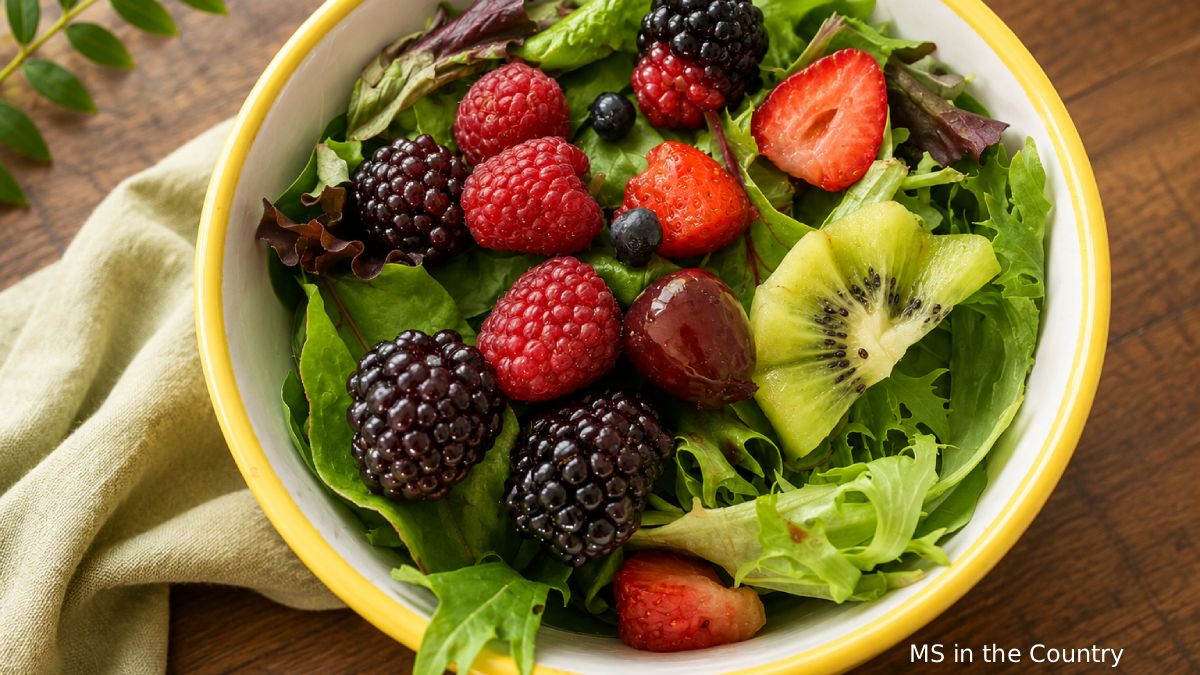
I focused on whole foods my body seemed to love: lots of vegetables and fruits, nuts and seeds, and healthy oils. I cut out gluten — research consistently links it to gut inflammation, and I noticed a real difference without it. I eliminated dairy because studies have found it may be associated with more frequent flares in people with MS. I cut processed foods entirely. And I stopped eating eggs, which had always caused me gut pain and digestive distress (I haven’t revisited that one — and I’m in no hurry to).
Within three months, I noticed something so unexpected that I didn’t trust it at first.
My heat intolerance was gone.
I had suffered from severe heat sensitivity for nearly 20 years. For those who don’t know, this is called Uhthoff’s phenomenon — when elevated body temperature causes MS symptoms to temporarily worsen. Between 60% and 80% of people with MS experience it. For me, it had been a defining, disabling feature of my life. Hot days meant staying inside. A warm shower could wipe me out.
Now it was simply… gone. I tested it over and over, almost in disbelief. And more than ten years later, it has not come back.
🌿 Healing Tip: Finding the Best Diet for MS Starts With You
The best diet for MS isn’t in any book — it’s the one your own body helps you write. Start simple:
- Remove one suspected trigger food for 2-3 weeks
- Notice how you feel 24-48 hours after eating something
- Add more colorful vegetables every day
- Keep a simple food and symptom journal
Small changes. Real results. Your body knows more than you think.
What Science Is Now Discovering (That My Body Figured Out First)
Here’s where things get genuinely exciting, and why the best diet for MS may be more personal than any researcher expected. I think my experience may point to something researchers are only beginning to understand.
The Gut-MS Connection Is Real
Research published in Neurology Neuroimmunology & Neuroinflammation has found that people with MS show disruptions in gut barrier function — what’s often called “leaky gut.” Specific gut bacteria that help maintain the intestinal lining appear to be depleted or disrupted in MS patients. When that lining is compromised, inflammatory signals can potentially travel in ways they shouldn’t.
Here’s something interesting: when you eat fiber-rich foods like vegetables, fruits, seeds, and whole foods, your gut bacteria break them down and produce helpful substances that keep your gut lining strong and healthy. Scientists have found that these same substances also play a role in supporting your immune system, which, as we know, is at the heart of MS.
Your Gut Microbiome and Heat Tolerance — A Surprising Link
This is the part that truly amazed me. Scientists are discovering that the bacteria living in your gut may actually affect how well your body handles heat. In one study, when researchers changed the gut bacteria in subjects to a more heat-friendly mix, those subjects became better at tolerating heat. Think about that — the bacteria in your gut might have a say in how your body responds to temperature.
More research has backed this up, finding that improving gut health helped people handle heat better and reduced heat-related problems. This is still a newer area of science, but the gut-temperature connection is real, and researchers are paying close attention to it.
Did changing my diet change my gut microbiome? Did a healthier microbiome somehow reduce my heat sensitivity? I can’t say for certain — I’m not a scientist, and my story is one data point. But the timing and the science make me wonder.
Even Scientists Now Say: There Is No Single MS Diet
The National MS Society states clearly that scientists have not found a definitive diet that changes the course of MS. What most MS experts do agree on is the importance of a healthy diet tailored to individual needs — emphasizing colorful fruits and vegetables, lean proteins, healthy fats, and whole grains while limiting processed foods and added sugars.
NOTE: If you include whole grains, opt for gluten-free ones such as quinoa, brown rice, buckwheat, and oats (certified gluten-free). As I mentioned earlier, gluten can cause gut inflammation — and for someone with MS, a healthy gut is everything. And as always, pay attention to how your body responds. Some people do well with grains; others feel better without them entirely.
Today, the broader nutrition world is catching up to what many of us in the MS community have suspected for years. Personalized nutrition is now the dominant trend in health science. Research and expert opinion have shifted away from universal diet prescriptions and toward the idea that our unique biology (our gut microbiome, our genetics, our individual food responses) determines what works for each of us.
🌿 Healing Tip: Feed Your Gut, Support Your MS
Science is showing that a healthy gut may be one of the best diet choices for MS you can make. Here’s how to start:
- Eat a wide variety of vegetables daily
- Include nuts and seeds for healthy fats and fiber
- Avoid processed foods that disrupt gut bacteria
- Consider removing gluten and dairy and see how you feel
A happy gut is a powerful ally.
What “Eating for Your Body” Actually Looks Like
I want to be clear: finding the best diet for MS isn’t a free pass to eat whatever you want and call it healthy. What I’m talking about is a more thoughtful, personalized approach to anti-inflammatory eating. Here’s how I think about it:
- Start with what the research agrees on. Whole fruits and vegetables. Healthy fats (olive oil, avocado, nuts, seeds). Avoid heavily processed foods, refined sugar, and anything from a box.
- Notice your body’s responses. Take eggs, for example — they give me gut pain and digestive distress, so I cut them out and never looked back. Your trigger food might be something completely different. Symptoms don’t always appear immediately, so track how you feel 24-48 hours after eating something. You might be surprised by what you discover.
- Prioritize gut health. Fiber-rich foods feed the beneficial bacteria that protect your gut lining. More vegetables, more variety, more color. Cruciferous vegetables are specifically known for gut health benefits.
- Don’t let a diet book take you to an unhealthy weight. If a protocol is making you underweight, depleted, or miserable, that’s your body telling you something important. No single author’s experience is more important than your own.
- Stay curious. Take note of unexpected improvements — or unexpected worsening. Your body is giving you data. Pay attention to it.
Eating colorfully is at the heart of the best diet for MS.
🌿 Healing Tip: Your Personal Best Diet for MS Checklist
Not sure where to start? Try this:
- Fill half your plate with vegetables at every meal
- Choose gluten-free whole grains like quinoa or brown rice
- Swap processed snacks for nuts, seeds, or fruit
- Notice and remove foods that cause any digestive distress
- Stay consistent — give changes at least 4-6 weeks
Healing isn’t about being perfect. It’s about paying attention.
This MS Awareness Month: Find the Best Diet for MS — Yours
March is MS Awareness Month, which means a lot of well-meaning voices will be telling people with MS what to do. What to eat. What to avoid. Which protocol to follow.
My message is different: you are the most important researcher of your own body. The protocols in books were written by someone whose body is not your body, whose MS is not your MS. The science is increasingly backing this up.
I spent nearly 20 years with heat intolerance so severe that it structured my entire life. Then, through a change I made by listening to my own body, it disappeared. I’m not telling you the same thing will happen for you. I am telling you that your own body might have answers that no diet book does.
Eat well. Eat for your body. And stay curious about what it’s trying to tell you.
💚 Still searching for the best diet for MS? These guides take it further.
Each MS Healing Guide tackles one challenge at a time (from gut health to nutrition to energy depletion) with peer-reviewed research translated into steps you can actually take. Because you deserve real answers, not more googling.