Figuring out what to eat for multiple sclerosis (MS) shouldn’t feel like solving a puzzle with missing pieces. You’ve heard it a thousand times: “Eat more vegetables. Avoid processed foods.” But when you’re standing in your kitchen at 6 PM, stomach growling, staring into the fridge… that advice feels about as helpful as telling someone to “just be happy” when they’re depressed.
If you’ve been wondering what to eat for MS, you’re not alone. I remember feeling lost, too. When I first changed my diet in 2004, it was one week before Thanksgiving. I chose that time because I was recovering from the worst MS flare I’d ever had. I was desperate to get better, so I went “cold turkey” on one of the MS diets.
Gluten-free wasn’t popular yet, and the organic section at the store was tiny. That first Thanksgiving, I felt so depressed. I knew what a typical “healthy” diet looked like, but everything changed when I had to avoid dairy, gluten, and processed foods.
It did get easier — but it took a long time. And I don’t want it to take that long for you.
Why Traditional MS Diets Leave You Feeling Defeated
Even the best advice from experts who genuinely understand MS can feel impossible to follow when you’re in the thick of it. They’ve created amazing protocols based on real science and personal experience, but when you’re dealing with crushing fatigue that makes chopping vegetables feel like climbing Mount Everest, or brain fog so thick that remembering a complex recipe becomes impossible, even the most well-intentioned plans can feel overwhelming.
The internet is flooded with MS nutrition advice that sounds perfect on paper but falls apart in real life. Each expert claims their approach is the answer, but what happens when you can’t stick to their rigid rules?
You feel like a failure. You blame yourself. You think maybe you’re just not disciplined enough.
But the problem isn’t your willpower. The problem is that most MS diets are designed for perfect people living perfect lives. People with MS need something simple—not strict rules.
What to Eat for MS: The Foundation Your Body Needs
After years of trial and error, countless failed attempts, and finally finding what works, I’ve learned something crucial about what to eat for MS. It’s not about following someone else’s perfect plan. It’s about understanding what your body needs to heal and finding the simplest way to give it those things.
Your inflamed nervous system doesn’t need another complicated meal plan. It needs consistent nourishment from foods that reduce inflammation, support your gut health, and give your brain the fuel it needs to function. Harvard Health reports that anti-inflammatory foods like leafy greens, berries, and omega-3-rich seeds can help calm inflammation — exactly the kind of support your body needs with MS.
Keep It Simple
When you’re asking yourself what to eat for MS, start with real food. Making a meal doesn’t have to be complicated. Instead of trying to create a magazine-worthy plate, just ask yourself: “What does my gut need to heal?
There are a lot of MS diets out there, and they all say something different. One says to eat beans, another says to avoid them. It’s confusing. I’ve tried many diets over the years. And here’s what I’ve learned:
The path to healing isn’t one-size-fits-all. But the foundation is the same: real food.
The MS-Friendly Food Foundation:
- Fruits (especially berries rich in antioxidants)
- Vegetables (especially leafy greens & cruciferous vegetables like broccoli and kale)
- Herbs and spices (turmeric, ginger, rosemary for their anti-inflammatory properties)
- Seeds (like flax, pumpkin, hemp, chia – packed with omega-3s)
- Lots of clean water
🌿 Healing Tip:
If it grew in the ground, on a bush, or on a tree, it’s food. If it came out of a package with a long list of ingredients you can’t pronounce, it’s not.
How to Build a Healing Plate (Without Losing Your Mind)
Forget about Pinterest-perfect meals. When you’re figuring out what to eat for MS, think about building plates that actually work for your life. Don’t worry about perfection. Just picture your plate in three parts:
Half vegetables – Mostly cooked at first (steamed, roasted, sautéed). Raw vegetables can be harder to digest when your gut is inflamed, so start gently. As you heal, you can add more raw foods back in.
A quarter clean protein – Wild-caught fish rich in omega-3s, pasture-raised chicken or turkey, or a small handful of seeds (like hemp, pumpkin, or chia) if you’re plant-based. Your nervous system needs quality protein to repair itself.
A quarter of healing starches – Sweet potatoes, winter squash, or beets. These provide steady fuel that supports your nervous system without causing blood sugar spikes that can worsen inflammation.
This isn’t a rulebook. It’s a picture you can keep in your head to make meal decisions easier, even on your foggiest days.
Real Meal Ideas: What to Eat for MS When You’re Tired
When people ask what to eat for MS, they usually want specific ideas they can actually make. Here’s what actually works when you’re tired, overwhelmed, or just trying to get through the day:
Morning (Start Gentle):
Your digestive system has been resting all night. Ease into the day:
- Warm water with lemon or coconut water to rehydrate your cells
- Sweet potato with hemp seeds (prep these the night before)
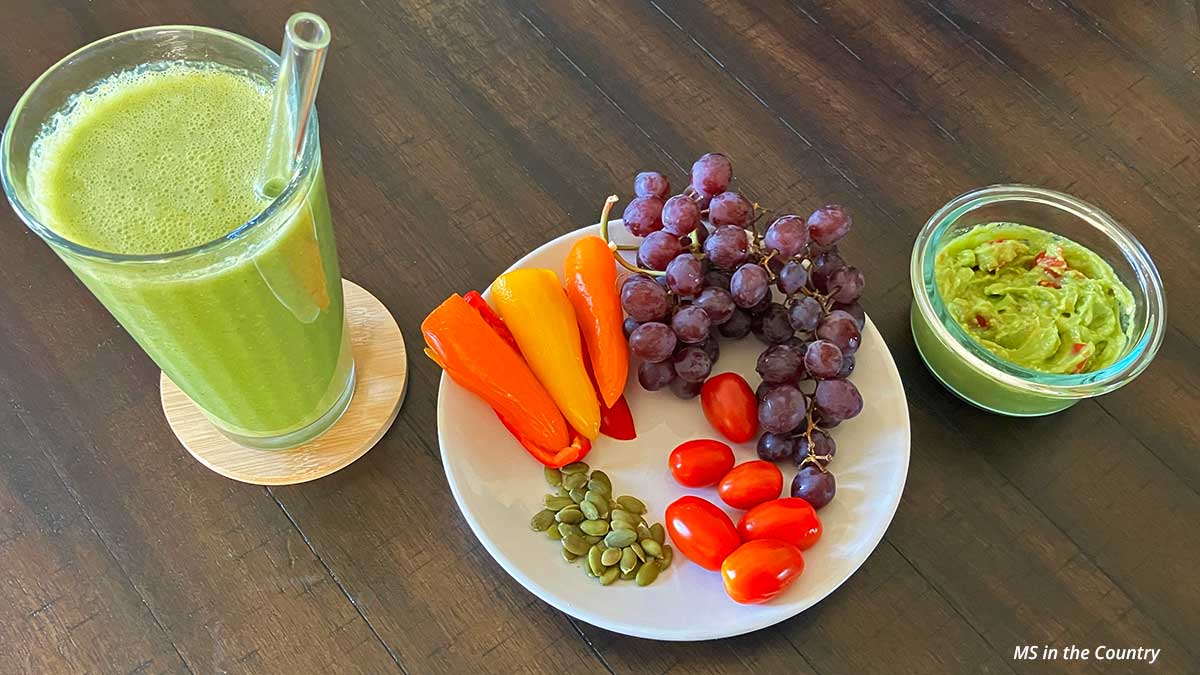
- A leafy green smoothie with berries and flaxseed (make extra and store in mason jars)
- Honeydew melon or grapes on days you want something light and easy
Lunch (Your Digestive Powerhouse Time):
Your digestion is strongest midday. This is when to eat your biggest, most nutrient-dense meal:
- Steamed greens with sweet potato (make a big batch and reheat)
- A big veggie soup (double the recipe and freeze half)
- Mashed sweet potato topped with sautéed kale and mushrooms
- A simple veggie bowl with broccoli, cauliflower, and squash
Dinner (Keep It Light):
Your body wants to wind down, not work overtime digesting heavy food:
- Steamed veggies with fresh herbs
- Steamed fish with roasted vegetables
- Zucchini noodles tossed with greens and flaxseed
- A warm, gentle soup
Snacks & On-the-Go:
- Grape tomatoes or cucumber slices
- Nori sheets with avocado
- Dates for a quick sweet fix
- Coconut water for hydration
Click here to see the easiest meal when you’re too tired to cook.
A smoothie. You can throw in leafy greens, berries, flaxseeds, and water — and in less than five minutes, you’ve got a full healing meal in a glass. No chopping, no cooking, no dishes.
When Life Gets in the Way (Because It Always Does)
Knowing what to eat for MS is one thing. Actually eating it when life throws curveballs is another. Here’s how to stay on track when everything goes wrong:
Traveling? Traveling makes it harder to know what to eat for MS. Pack fruit, veggie sticks, and herbal teas in your carry-on. Look for the simplest option on restaurant menus – steamed vegetables, plain fish, or a simple salad.
Hate cooking? Make double portions and save half for tomorrow. Batch cook vegetables and soup once a week. Invest in a good steamer basket – it makes cooking vegetables foolproof.
Does the family eat differently? Add your healing foods alongside theirs. Swap out ingredients so you don’t feel left out. Make “nice cream” instead of ice cream, or build tacos with healing fillings instead of cheese-loaded ones.
Having a flare? Keep it even simpler. Smoothies, steamed vegetables, and soup become your best friends. Don’t feel guilty about making things easier on yourself.
The Mindset Shift That Changes Everything
Here’s the secret that transformed my relationship with food and my MS: Stop asking “What should I eat?” and start asking “What does my body need right now?”
Some days, that’s a warming bowl of soup when you’re feeling scattered and anxious. Other days, it’s a fresh, energizing salad when you’re feeling sluggish. The key is to keep loading your body with healing foods while honoring what you actually need in the moment.
Your body isn’t broken. It just needs the right support to heal.
Your body isn’t broken. It’s been doing its best in challenging circumstances. It just needs the right support to heal. Trust it. Nourish it. Take it one meal at a time.
When you approach MS nutrition this way, something magical happens. Food stops being another source of stress and becomes a form of self-care. Each meal becomes an opportunity to show your body love instead of another chance to fail at someone else’s perfect plan.
Your Next Step (Start Tomorrow)
Forget about overhauling your entire diet overnight. That’s how you burn out and give up. Instead, tomorrow morning, before anything else, drink that water. Then make one simple, nourishing meal. Maybe a smoothie. Maybe a bowl of steamed veggies with sweet potato.
It doesn’t have to be complicated or perfect. Healing happens one plate at a time, one meal at a time, one choice at a time.
You don’t need to be perfect. You just need to begin.
💌 Discover What to Eat for MS (Without the Overwhelm)
Struggling to figure out what to eat for MS? Get simple, healing food ideas that are quick, nourishing, and easy to make — even on your hardest days.
You’ll also join my MS in the Country newsletter. It comes with simple tips, recipes, encouragement, and new resources each week.