
Inflammation Isn’t
Random.
It’s a Loop You Can Interrupt.
Discover why your body stays inflamed with MS — and the daily signals of safety, nourishment, and rest that help turn it down.
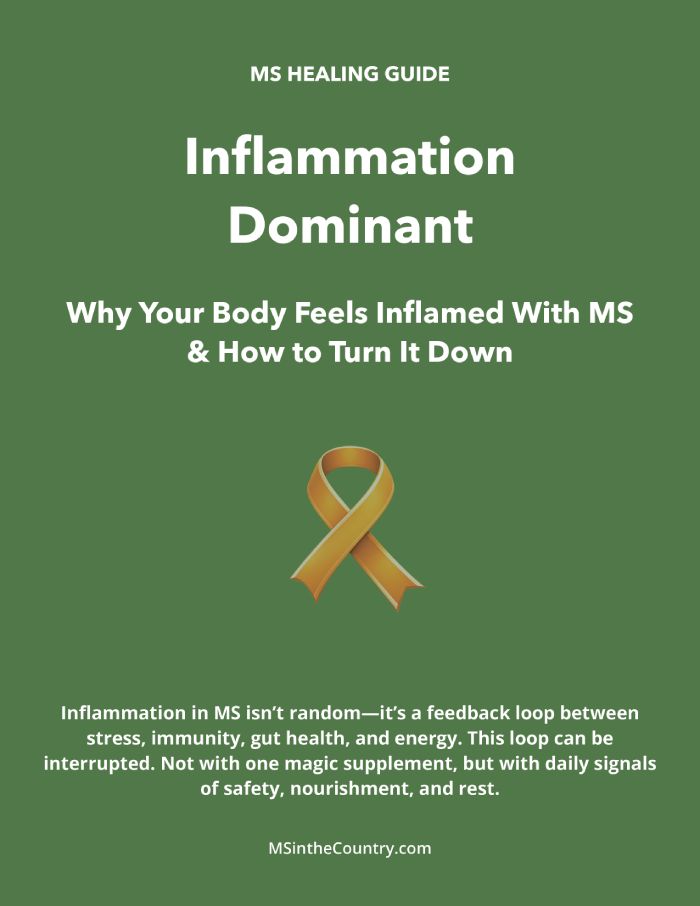
“Inflammation in MS isn’t random — it’s a feedback loop between stress, immunity, gut health, and energy. This loop can be interrupted. Not with one magic supplement, but with daily signals of safety, nourishment, and rest.”
Instant PDF download · 9 pages · No fluff
DOES THIS SOUND FAMILIAR?
You’re eating well.
You’re still inflamed.
You’ve tried the anti-inflammatory diets. You’ve cut out gluten, sugar, and dairy. You’ve taken the supplements. But you still feel stiff, exhausted, and foggy. Nobody told you that food is only one piece of the puzzle.
When your nervous system is stuck in alarm mode, inflammatory chemicals stay high — no matter how clean your diet is. Here’s what chronic inflammation looks like every day with MS:
✔ Fatigue that won’t lift ✔ Persistent brain fog
✔ Muscle stiffness & spasticity ✔ Bladder urgency & symptoms
✔ Pain sensitivity & flares ✔ Heat intolerance
✔ Slow recovery after activity ✔ Disrupted sleep
This isn’t your body failing you. This is your body’s alarm system stuck in the “on” position. The inflammation isn’t the enemy — it’s the signal. This guide teaches you how to answer it.
WHAT RESEARCH SHOWS
Three Things Most People
With MS Are Never Told
Recent research reveals that MS inflammation is a whole-body process — not just a brain problem. Understanding these three discoveries changes everything.
1. Inflammation Is Driven by Stress Biology, Not Just Food
Chronic inflammation rises when the nervous system feels unsafe, cortisol rhythms flatten, sleep is disrupted, and physical exertion exceeds recovery capacity.
→ This is why people can eat perfectly and still feel inflamed. Calming the nervous system comes first.
2. The Gut Is a Control Center for MS Inflammation
Research shows gut imbalance predicts flare activity. When the gut lining is irritated, inflammatory chemicals leak into circulation, and brain inflammation increases.
→ Healing inflammation starts in the gut — not with extreme diets, but with gentle consistency.
3. Mitochondria Matter More Than You Think
People with MS have impaired mitochondrial signaling. When your cellular energy factories are stressed, inflammation rises — causing crushing fatigue and slower healing.
→ Rest + nutrients + pacing directly lowers inflammation. Rest is treatment, not laziness.
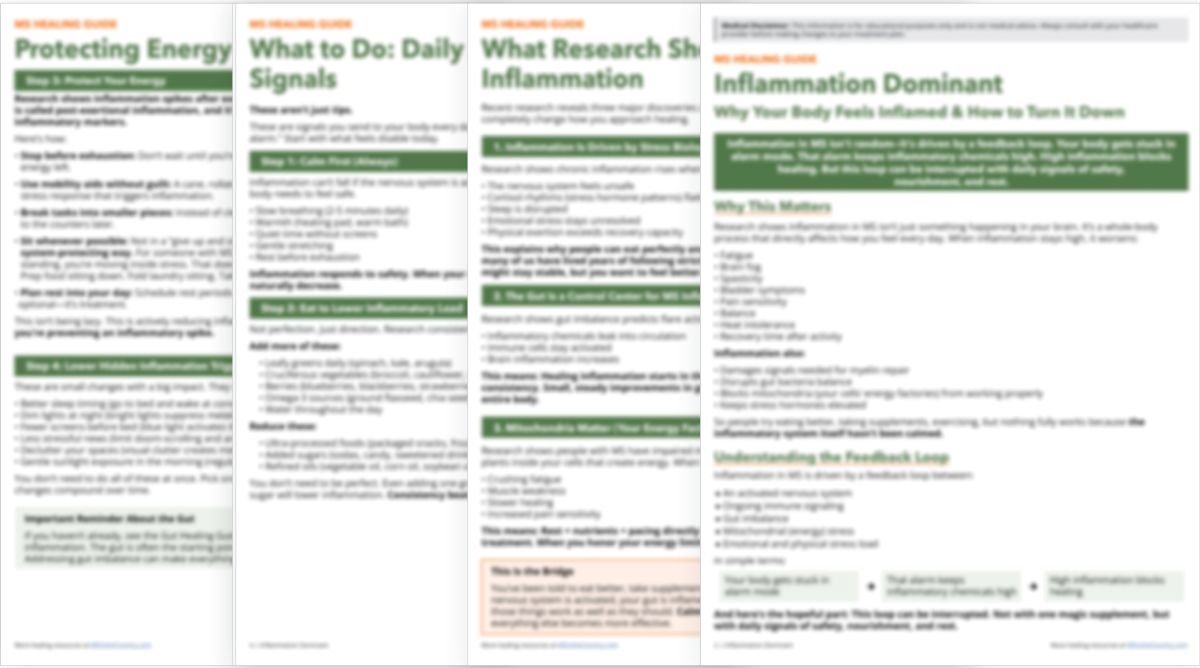
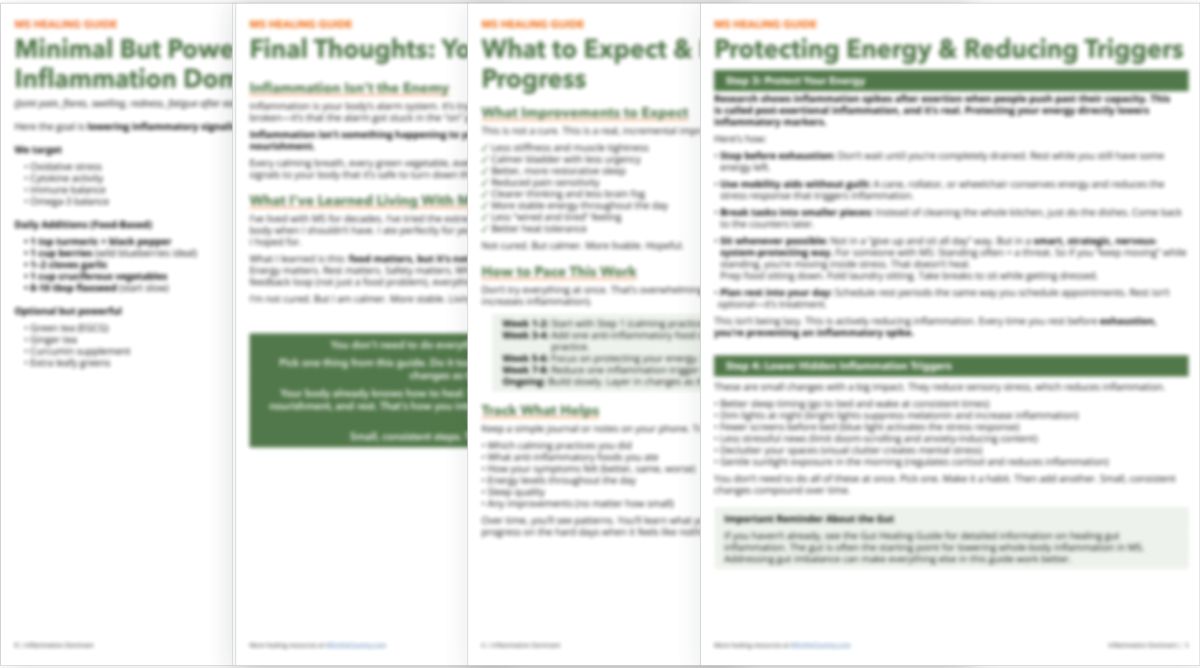
WHAT’S INSIDE THE GUIDE
9 Pages. Practical. Compassionate.
Written for people who are already exhausted. No extreme protocols. No guilt. Just clear, doable steps that work with your body — not against it.
🔁
The Feedback Loop Explained
A clear breakdown of how MS keeps inflammation high, and why addressing the loop (not just symptoms) is the key.
🔬
The Research Made Simple
What current science says about stress biology, gut health, and mitochondria in MS — translated into plain language.
🌿
Daily Anti-Inflammation Signals
Simple, free practices that send your body the message: “It’s safe. We can turn down the alarm.”
🥗
Eat to Lower Inflammatory Load
Not a diet plan — just the specific foods research consistently shows help, and what to gently reduce. Consistency beats perfection.
⚡
Protect Your Energy
How to stop triggering post-exertional inflammation — including the mindset shift around mobility aids and rest.
📝
Daily Tracker Sheet
A simple checklist to track daily signals, symptom patterns, and small wins — designed to take 2 minutes.
“Inflammation isn’t something happening to you. It’s your body asking for safety, rest, and nourishment. Every calming breath, every green vegetable, every moment you rest before exhaustion — these are all signals to your body that it’s safe to turn down the alarm.“
— From the guide, MSintheCountry.com
HOW TO USE THIS GUIDE
One Change at a Time.
Layers Build on Each Other.
The guide gives you an 8-week framework — gentle enough that it doesn’t add stress to your system.
Week 1–2: Start with calming
Pick one daily calming practice. Slow breathing, warmth, quiet time. Inflammation can’t fall while the nervous system is activated — so this comes first.
Week 3–4: Add one anti-inflammatory food daily
One leafy green. One cup of berries. One simple addition. Keep the calming practice going.
Week 5–6: Focus on protecting your energy
Rest before exhaustion. Use supports without shame. Stop before you’re drained — every time you do, you prevent an inflammatory spike.
Week 7–8: Reduce one hidden trigger
Better sleep timing, less screen light at night, and less clutter. One change. Small, consistent steps compound over time.
Ready to Start Turning
Down the Alarm?
You don’t need to do everything perfectly. You just need to start. Pick one thing from this guide. Do it today. Your body already knows how to heal — you’re just giving it the signals it needs.
$3.99
One-time · Instant PDF Download
✓ Instant download ✓ Print or use on any device ✓ No subscription
Instant Download Notice: This guide is delivered immediately as a digital download. For that reason, purchases are final and refunds aren’t available.
Medical Disclaimer: This guide is for educational purposes only and is not medical advice. Always consult your healthcare provider before making changes to your treatment plan. · MSintheCountry.com